Last updated: November 05, 2026
Quick Answer: To add an irrigation system to a well property, start with the well’s recovery rate, pump and pressure tank details, a rough water budget, and a septic-safe layout; in practice, that means designing for the well’s real limits before any trenching begins.
Key Takeaways
- Start with the well’s recovery, pump details, a water budget, and a septic-safe site layout.
- Compare irrigation demand with recovery and cycling limits before you size zones.
- Divide the landscape into zones that fit the well and pressure tank, one at a time.
- Size demand first, then build piping, controls, and protection around the well’s limits.
An irrigation system for How to Add an Irrigation System to a Well Property works best when the well, the pressure tank, and the pump can keep up with the extra demand without short-cycling or outrunning recovery. In short: the job is not just adding sprinklers; it is matching water use to what the well can supply hour by hour.
What to know before you buy parts or dig a trench
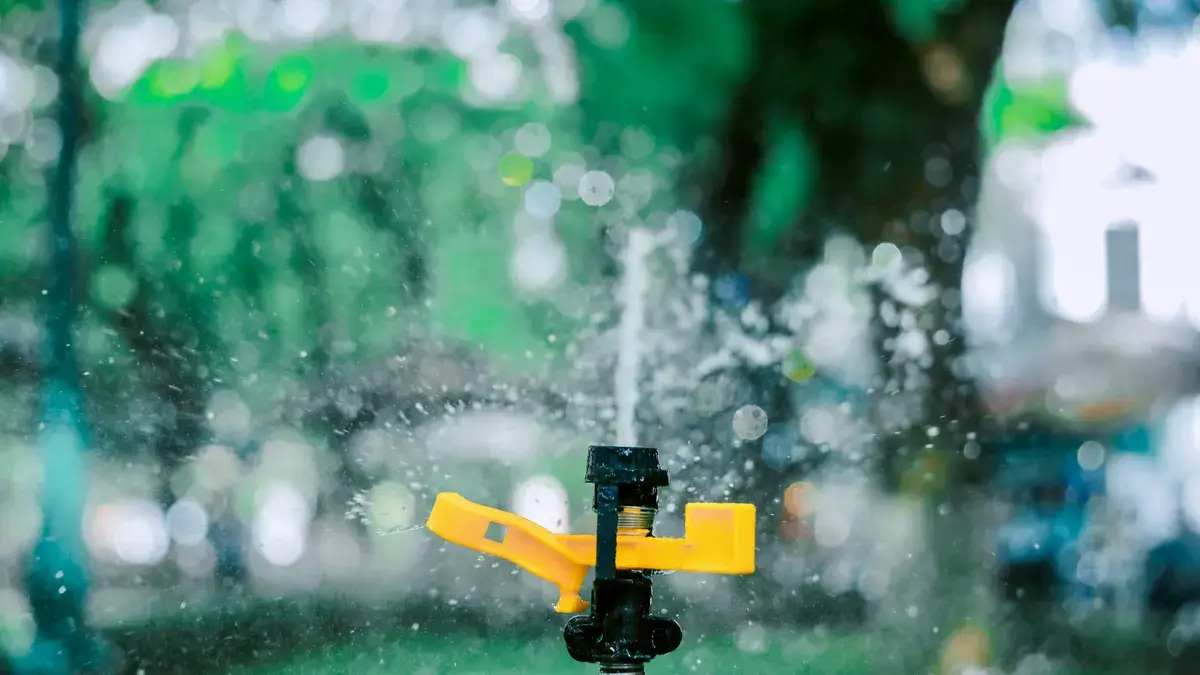
You need four things first: your well’s recovery rate, your pump and pressure tank details, a rough irrigation water budget, and a layout that respects the septic system. Without those, the system may spray beautifully for a week and then hammer the pump every time several zones start at once.
Start by finding the pump’s cut-in and cut-out pressures on the pressure switch, the tank size, and any well log or pump paperwork that shows depth and yield. If you do not have records, a well contractor can usually identify the pump curve and tank setup in a service visit. That matters because the irrigation plan must fit the well’s recharge, not a city-water assumption of endless supply.
A private well is not a fire hydrant. The water level in the well drops while the pump runs, then climbs back during recovery. If irrigation demand exceeds that recovery, the pump can cycle too often, overheat, or pull the water level low enough to send air or sediment into the line. That is why irrigation on a well is a water-balance project first and a landscaping project second.
The septic system matters for a different reason. A sprinkler line should not cross or saturate septic tanks, drain fields, or reserve areas. Saturated soil near septic components can make access harder and can disturb how the field drains. The safest practical plan is to keep irrigation and septic utilities clearly separated on the site map before any trench is marked.
If you want a broader design framework, the site’s system design and planning hub covers the upstream decisions this article builds on.
How do you check whether the well can support irrigation?
You check it by comparing irrigation demand to the well’s recovery and the pump’s cycling limits. That is the answer that keeps the rest of the project from being guesswork.
Use the well log, a timed recovery test, or a contractor’s flow test to estimate how much water the well can deliver over time. You are not looking for a peak burst alone; you are looking for how many minutes or hours the well can sustain a realistic irrigation load before the water level falls too far. A well that briefly supplies strong flow may still be a poor irrigation source if it recovers slowly.
Then look at the pressure tank and pressure switch settings. A small pressure tank gives you little drawdown between cut-in and cut-out, which means the pump starts and stops more often. That short cycling is hard on the pump motor and pressure switch contacts. Irrigation zones that demand several gallons per minute for long runs can make a marginal tank behave worse.
A useful rule of thumb is to plan the irrigation schedule around zones rather than around the whole yard at once. One zone at a time is easier on the well than two or three zones firing together, especially if the property also uses water indoors while the sprinklers run. If the property has a dishwasher, shower, or laundry cycle running at the same time, the added household draw can push the pump into cycling problems.
Do not assume the best-looking watering schedule is the safest one. A deep-well pump that never seems stressed on a hose bib can still struggle when a valve manifold opens several sprinkler zones back-to-back. The issue is not just pressure at the head; it is the long-term draw on the well and the pump.
A professional well pump contractor can confirm the drawdown and recovery numbers if the existing records are thin. That check is worth it when the well history is unclear, the pump age is unknown, or the property has already shown low-pressure episodes.
Plan the irrigation system around water use, not around lawn size
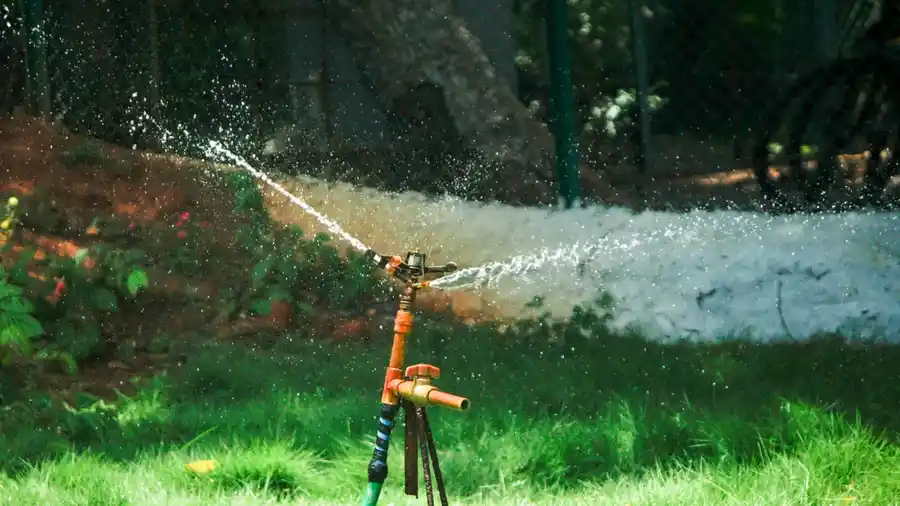
You plan it by dividing the landscape into zones that fit the well’s safe output and the pressure tank’s limits. That keeps the irrigation controller from demanding more water than the system can supply at one time.
Start with the highest-priority areas: foundation planting beds, new sod, a small lawn section, or drought-sensitive shrubs. Then group emitters and sprinklers by similar water need. A shady bed should not be on the same schedule as a hot, exposed turf zone if the same run time would overwater one and underwater the other.
The controller should be set to stagger zones with a few minutes between starts, not to launch everything at once. Many systems use a delay between zones to let pressure settle. That small pause matters on a well because it reduces the chance that the pump will start, stop, and start again within a short window. The goal is stable runtime, not a frantic sequence of pressure swings.
Think about the day’s total water budget. A 30-minute run on four zones can be a very different load from a 15-minute run on eight zones, even if the landscape size is the same. The right choice depends on the well’s recovery rate and the pump’s ability to sustain flow without losing prime or cycling too quickly.
This is also where irrigation method matters. Drip lines and micro-spray heads usually place less strain on a well than a large, high-flow spray layout, because they can be spread across more compact zones and run longer at lower demand. That does not make them automatically right for every property, but it does make them worth considering when the well is modest. The EPA’s WaterSense guidance on efficient irrigation supports this kind of lower-demand zoning approach. EPA WaterSense
If the property has a history of low yield in late summer, build that into the plan. Wells often behave differently in dry months than they do in spring. A schedule that works in April can be too aggressive in August when household use and outdoor demand both rise. The USGS notes that groundwater levels can vary seasonally, which is one reason to plan conservatively. USGS Groundwater
How to add the irrigation system to a well property, step by step
You add it by sizing the demand first, then building the piping, controls, and protection around the well’s real limits. That order keeps the install from being expensive guesswork.
- Measure the water source first. Get the well log, pump details, and pressure tank specifications before trenching anything. If records are missing, have the well tested for recovery and pressure behavior. The result you want is a clear picture of how long the well can supply irrigation without dropping into unsafe cycling.
- Draw the site with the septic system marked. Put the well, septic tank, drain field, reserve area, and all proposed trenches on one sketch. Leave a clear buffer around septic components and keep irrigation routing out of access lids and service paths. The finished sketch should show a clean separation between water lines and septic infrastructure.
- Choose zones that match the well’s output. Divide the property into manageable irrigation zones based on plant type and demand. Keep the largest water users in separate zones if needed so the controller can run them one at a time. When this works, each zone can run long enough to soak the area without forcing multiple simultaneous starts.
- Install the mainline, valve manifold, and controller wiring. Run the piping from the water source to the valve box, then connect the irrigation controller to the zone valves and pump-start relay if the design uses one. Keep wiring protected and label each zone clearly. A correct install leaves each valve identifiable at the controller and in the field.
- Program staggered run times. Set the controller so zones start with a delay and do not overlap unless the design specifically calls for it. Begin with shorter run times, then adjust after observing pressure behavior and soil response. The system is working when the pump stays within normal cycling ranges and the soil receives even coverage without puddling.
- Test at the edge of demand, not just on a calm day. Run the irrigation while a normal household load is present, such as a sink or shower, to see how the well behaves under realistic conditions. Watch for pressure drops, pump chatter, or unusually long recovery. A good test shows steady operation instead of erratic starts and stops.
- Fine-tune by season. Revisit run times after the first few weeks and again in hotter weather. Plants need less water in cool, damp weather and more in dry heat, but the well may not be able to support a simple “more is better” approach. The final setting should protect the pump as well as the landscape.
That sequence is the heart of the project. If a contractor starts by laying pipe before looking at recovery rate, the job can still look finished while being wrong for the property.
Protect the well pump and pressure tank from damaging cycling
You protect them by reducing start-stop frequency and by keeping the draw from exceeding the system’s comfortable range. That is the difference between a system that lasts and one that burns through switches, capacitors, and pump motors early.
Pump cycling happens when the pressure drops to cut-in, the pump starts, the pressure rises to cut-out, and then the pump shuts off again too soon. On a well property with irrigation, this often shows up when a zone is too small, a leak exists in the line, or the pressure tank is undersized for the demand. The pressure tank is not there to water the lawn; it is there to soften the pump’s work.
A larger pressure tank can reduce cycling, but it is not a cure for a badly planned zone layout. If the controller is set to open too many valves or if a single zone demands more than the well can sustain, the pump may still run hard for long stretches or short-cycle under changing pressure. The system needs both storage and sensible scheduling, and a well pump professional can confirm whether a larger tank would actually help before you buy one.
One common mistake is installing a zone because it “fit the yard,” then discovering it fit the pump poorly. That mistake costs pump life, not just convenience. The better move is to split the zone, even if it adds a little trenching and another valve box, so the well sees steadier demand.
Another mistake is ignoring a pressure tank that is already marginal. If the tank bladder is failing or the drawdown is weak, irrigation can expose the problem immediately. In that case, the fix is not to water around the issue; it is to service the tank before the new system goes live.
For private wells, a practical protection strategy is to keep zones modest, leave time between starts, and avoid running irrigation during the parts of the day when the house uses the most water. The system will feel less dramatic, which is usually exactly what a well needs.
Keep irrigation away from septic trouble
You keep it away by mapping, trenching, and scheduling with the septic field in mind from the start. That prevents one utility from making the other harder to maintain.
Do not run irrigation lines over septic tanks, risers, or drain fields if there is another route. Heavy watering near a drain field can add unwanted saturation to already sensitive soil, and saturated soil can reduce the field’s ability to disperse wastewater. Even if the sprinklers do not damage the septic system immediately, they can complicate diagnosis later when wet spots appear.
Keep valve boxes, backflow-related components, and service access points out of the septic reserve area if possible. Service techs need room to work, and a saturated or root-heavy area makes access messy fast. A clear utility map saves time during repairs and keeps digging from becoming a guess.
Also think about compaction. Driving trenching equipment or repeatedly stepping over the same area near a septic component can change the soil profile. On a septic property, the safest practical approach is to treat those areas as off-limits unless the layout leaves no alternative and a qualified septic professional has confirmed the route.
Irrigation and septic can coexist on the same property, but they should not be treated as one wet zone. The first is a controlled supply system; the second is a treatment and dispersal system. Mixing their roles on the same patch of ground is where trouble begins.
When to stop and bring in a pro
You should bring in a well contractor or irrigation designer when the well yield is uncertain, the pump already short-cycles, or the septic layout leaves little room for a clean route. Those are not small details; they decide whether the system is safe to run.
A professional is especially useful if the property has a deep well, an older pressure tank, or signs of low recovery during dry months. That is also true if the home already sees pressure dips when a hose runs, because irrigation will magnify an existing weakness. A contractor can also confirm whether the pump relay, check valve arrangement, and zone plan are appropriate for the load.
If the project is simple and the well records are solid, a competent installer can usually design around the known limits. If the property is borderline, guessing is expensive. A wrong plan can cost more than a second opinion, and it may shorten pump life or force a later redesign.
For a well property, the right time to ask for help is before trenching, not after the first pressure problem.
Can a well support a sprinkler system?
Yes, if the well’s recovery rate and pump capacity can match the sprinkler demand without severe cycling. The key is not the existence of a well but the well’s sustained output over time. A small or slow-recovering well may still support irrigation if the zones are sized conservatively and run one at a time.
How do you protect a well pump from irrigation demand?
You protect the pump by reducing start-stop cycling, spacing out zone starts, and keeping irrigation demand within the well’s recovery. A properly sized pressure tank helps, but it will not save a system that asks for too much water at once. Avoid overlapping zones unless the system was built for that load.
Does irrigation affect a septic system?
Yes, if irrigation is placed over or too close to septic components, especially the drain field. Excess water can saturate the soil and make septic performance harder to manage. The safer approach is to keep sprinkler lines, valve boxes, and heavy watering patterns away from tanks, risers, and drain-field areas.
Drafted with AI; not yet reviewed by a person.