Last updated: November 13, 2026
Quick answer: an irrigation performance audit usually gives you a zone-by-zone snapshot of the system in one pass, and this guide shows how to record it clearly. An irrigation performance audit tells you which zones are wasting water, which zones are underperforming, and what changed from one season to the next.
This guide, Irrigation System Performance Audit and Recordkeeping — The Complete Guide, shows you what to check, what to write down, and how to keep records that actually help.
The steps below settle the field notes, the logbook, and the repeat checks that keep problems from becoming habits.
What an irrigation performance audit actually does
An irrigation performance audit gives you a zone-by-zone snapshot of how the system is behaving right now. It is not just a walkaround. It ties what you see at the sprinkler heads, the controller, the valves, and the pressure points to a maintenance log you can compare later.
Because of that, the audit is most useful when it is tied to a date and a zone count. One dry strip in one week is not the same as a repeat issue over three visits.
Picture this: you’re standing at the controller after a dry spell, and one lawn strip is soft while another looks stressed. You need more than a guess. You need zone notes, run times, coverage checks, and pressure observations written down in one place.
The audit usually covers 4 things:
- Which irrigation zones run when, and for how long
- Whether sprinkler heads throw water where they should
- Whether valves open and close cleanly
- Whether pressure or coverage changes point to a leak, clog, or mismatch
A generic note like “front yard dry” does not help much in month 3. “Zone 2, 18-minute run, left side dry at 2 heads, pressure drop heard at valve box” does.
Here’s the catch: the audit is only useful if you can compare one season to the next. A single note can explain a one-off issue. A record set shows patterns.
Key takeaways
- The audit is a system check, not a quick glance.
- Zone-by-zone notes matter more than one overall rating.
- Write down what happened, where it happened, and for how long.
- The record is the value. The walk is only half the job.
What should you record during irrigation maintenance?
You should record the zone, run time, coverage pattern, pressure, and fix every time you inspect or adjust the system. That is the core of a useful maintenance log, and it works for homeowners, property managers, and service pros.
Because the same fields keep showing up, a single template is easier to scan than a fresh note each time.
Picture this: you’re opening a notebook after a spring check and trying to remember which head was tilted, which valve clicked late, and whether Zone 4 needed a 5-minute trim. If the note is vague, the next visit starts from zero.
A good entry needs 5 details:
- Date and season — spring startup, mid-summer check, or fall shutdown note.
- Zone number or name — front lawn, drip bed, side strip, or Zone 3.
- Run time — the exact minutes set on the controller.
- Observed condition — dry edge, overspray, pooling, misting, dead spot, slow valve response.
- Action taken — nozzle cleaned, head straightened, schedule changed, leak flagged, no change made.
Use the same words each time. If one entry says “weak throw” and another says “low coverage,” your log turns fuzzy. Pick one phrase and stick with it.
A simple format can work better than a long paragraph:
- Zone 1: 12 min, even coverage, no pooling
- Zone 2: 18 min, left edge dry, one head clogged
- Zone 3: 10 min drip line, no visible leak, pressure normal
- Controller: program A adjusted by 2 min
- Valve box: moisture present, no standing water
A short log like that is easier to compare later. It also keeps the record tied to one zone and one action.
How do you audit an irrigation system?
You audit an irrigation system by checking each zone, watching the spray pattern, noting pressure behavior, and writing the result in a maintenance log the same day. That keeps the audit tied to real field conditions instead of memory.
Because the log is part of the audit, the note should be written before the next zone starts.
Picture this: you’re moving from one irrigation zone to the next with the controller in hand, listening for valve clicks and watching where the water lands. The job is part observation, part bookkeeping, and part repeat check.
Use this 6-step procedure:
-
Start at the controller.
Record the date, active program, and current run times. Note any battery warning, missing display, or odd schedule change. The result should be a clear baseline for the rest of the audit. -
Run one zone at a time.
Let each zone run long enough to show its pattern, often 5 to 10 minutes for a spot check. You want enough time to see full head rotation, spray reach, and any misting or runoff. -
Walk the coverage line.
Check the edges, corners, and overlap points. Look for dry gaps, overspray onto pavement, and water that hits the wrong bed. Coverage that misses the target area usually shows up at the edge first. -
Listen and watch the valves.
A valve should open and close without obvious chatter or delay. If you hear hammering, see a slow start, or get a zone that dribbles after shutoff, write it down for follow-up. -
Check pressure clues.
You do not need a lab report to notice a problem. Misty spray, short throw, or heads that pop up weakly can point to low pressure. Hard spray, fogging, or splash-off can point the other way. -
Log the finding right away.
Write the zone, the condition, and the next action before you move on. If a head needs replacement later, the note should already say which one and why.
A clean audit usually ends with a short list: adjust schedule, clean nozzle, straighten head, inspect valve, or recheck next season.
Common mistake: writing “needs attention” and nothing else. That costs you a second visit and a fresh round of guessing. Write the exact symptom instead.
Common mistake: checking only the visibly bad zone. That leaves the hidden slow leak or weak overlap untouched. Audit every zone in the same pass, even the one that “looks fine.”
How do you track zones, run times, and coverage patterns?
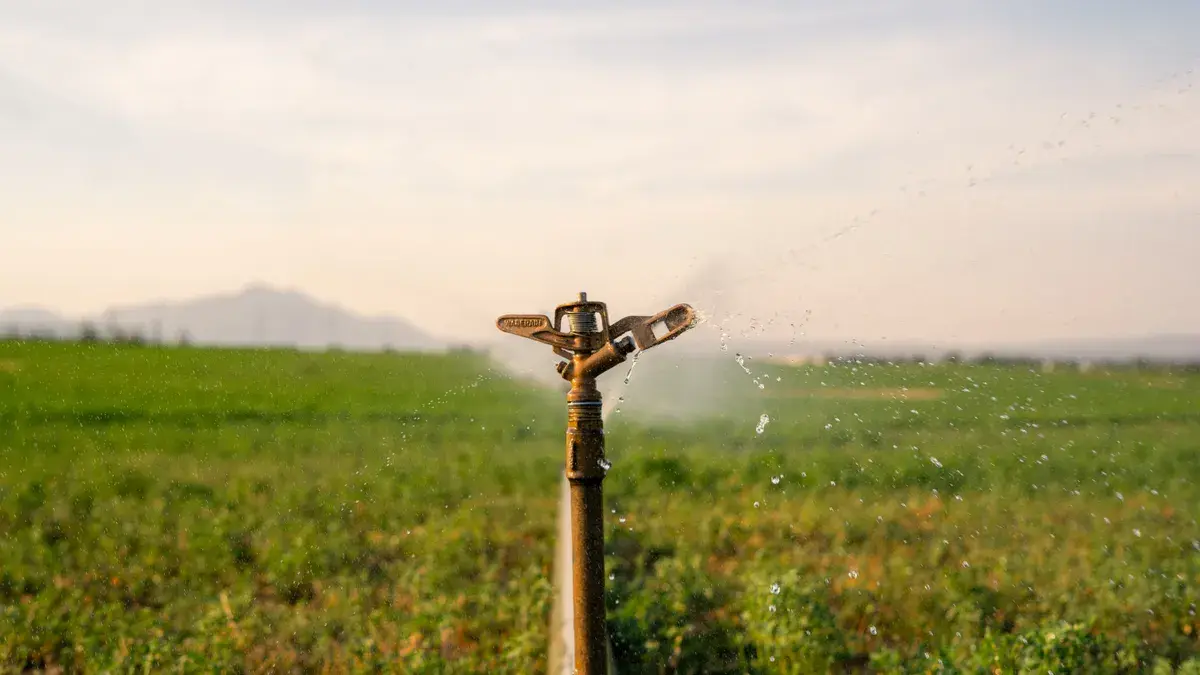
You track zones, run times, and coverage patterns by using the same note structure for every inspection and every season. That gives you a record you can compare instead of a pile of unrelated comments.
Because the format stays the same, the next review is faster and the patterns are easier to spot.
Picture this: you’re looking at a controller with 6 zones and trying to remember which one needed extra time in July and which one ran too long in April. Without a standard note, the details blur together fast.
A strong zone record should show:
- Zone ID
- Run time
- Plant type or area served
- Coverage shape
- Any visible issue
- Action taken
A practical coverage note might read:
- Zone 1 — 14 min — lawn strip — even fan pattern — no issue
- Zone 2 — 16 min — shrub bed — weak left edge — nozzle likely clogged
- Zone 3 — 10 min — drip line — steady flow — no visible leak
- Zone 4 — 12 min — corner bed — overspray on path — head needs aim change
That kind of note tells the next reader what happened in under 10 seconds. It also gives you a season-to-season record, which matters when one area keeps failing under the same schedule.
The key is consistency. If you measure run time in minutes one month and “short cycle” the next, the record loses value. If you call the same area “side yard” in one entry and “west strip” in another, you will waste time matching them up later.
Use a fixed naming system:
- Front lawn
- East bed
- North strip
- Drip zone A
- Drip zone B
Who this is not for: if you only want a one-time fix and do not plan to revisit the system, a full record system is overkill. A simple service note may be enough. But if you want to spot repeat issues, the log is the point.
What pressure observations tell you
Pressure observations tell you whether a zone is likely underperforming because of supply, blockage, or a control problem. You are looking for field signs, not perfection on paper.
Because pressure problems often show up at the head first, the spray pattern is a useful clue.
Picture this: you’re at a sprinkler head that throws a fine fog instead of a clean arc. That is not just a spray style problem. It can also point to pressure that is too high for the head, a mismatch in nozzle size, or wear in the line.
Write pressure clues in plain words:
- Low pressure signs: weak throw, short radius, heads not fully popping up, uneven reach
- High pressure signs: misting, fogging, splash-back, noisy spray, water blowing past the target
- Mixed signs: one head strong, the next weak, which can point to a blockage, kink, or partial valve problem
A note like “Zone 5 fogging at 2 heads, weak at far corner” is far more useful than “pressure off.” It tells the next person where to look first.
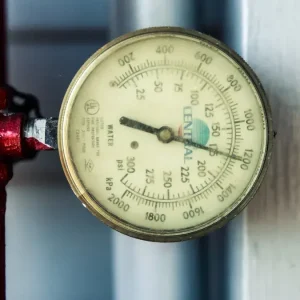
You do not need to invent a number if you do not have one. If you do measure pressure with a gauge, record the reading and the point where you took it. If you do not, record the visual clue and the zone condition.
Two useful records to keep
- Pressure clue at the head
- Pressure clue at the valve box
The first shows what the turf or bed experienced. The second helps separate a zone issue from a supply issue. On the flip side, a single reading without a location can mislead you.
How seasonal records help you catch patterns
Seasonal records help you see repeat problems that one inspection would miss. A dry edge in April, a misting issue in July, and a clogged head in September may all be part of one pattern, not three separate surprises.
Because the same zone can behave differently across the year, the season label matters as much as the symptom.
Picture this: you’re flipping back through three months of notes and seeing the same zone flagged twice after warm weather and once after a windy week. That pattern tells you where the system is sensitive.
Use seasonal labels in the log:
- Spring startup
- Early summer
- Peak heat
- Fall check
- Winter shutdown
Each season changes what you notice. In spring, you may spot broken heads, stuck valves, or schedule drift after inactivity. In peak heat, you may see coverage gaps that only show under full demand. In fall, you may notice overwatering or a zone that no longer needs the same run time.
Seasonal notes should include:
- controller schedule changes
- zone-by-zone run time adjustments
- coverage shifts after plant growth
- leak or pooling signs after long runs
- any head replacement or nozzle cleaning
A seasonal log does one more thing: it protects you from false memory. People remember the last big problem and forget the smaller ones. Records keep the smaller ones from getting lost.
Here’s the catch: if you only write down repairs, you miss the conditions that caused them. A useful maintenance log shows the problem, the setting, and the fix.
A good seasonal entry might include
- Date
- Season
- Zone
- Run time
- Coverage note
- Pressure note
- Action taken
What a useful maintenance log looks like in practice
A useful maintenance log is short, repeatable, and specific enough that someone else can read it six months later and know what happened. It should fit on paper, in a spreadsheet, or in a notes app without turning into a novel.
Because the form is compact, the important details are easier to spot.
Picture this: you’re closing out a visit and deciding whether to write one long paragraph or three tight lines. The tight lines win. They are faster to scan, easier to compare, and less likely to hide the one detail that matters.
A solid log entry can look like this:
- Date: 2026-06-14
- Zone: 2, front lawn east
- Run time: 14 min
- Coverage: left edge dry, center even
- Pressure: weak throw at two heads
- Action: cleaned nozzle, recheck next week
That is enough to support a later audit. It gives you the zone, the condition, the time, and the next step.
If you want a longer form, add these fields:
- controller program
- weather note
- valve response
- parts replaced
- follow-up date
Keep the form the same all season. A changing template makes comparison harder. A stable one makes trends obvious.
The best logs are not fancy. They are consistent. If you can read the entry in 10 seconds and know what changed, the record is doing its job.
For a broader maintenance framework, see EPA WaterSense guidance on efficient irrigation scheduling and inspection, the University of Florida IFAS irrigation resources, and extension guidance from Colorado State University on irrigation troubleshooting. The EPA WaterSense program is a good starting point for schedule-based checks, and it is supported by current federal water-efficiency guidance. See also EPA WaterSense, University of Florida IFAS, and Colorado State University Extension.
What are the most common recordkeeping mistakes?
The most common recordkeeping mistakes are vague wording, missing zone labels, and notes that do not tie to a specific run time or season. Those mistakes cost you time, and they hide repeat failures.
Because the whole point is comparison, a note that cannot be matched to one zone is weak from the start.
Picture this: you’re trying to diagnose a system from last year’s notes, and the only entry says “fixed sprinkler issue.” That line tells you almost nothing. It does not name the zone, the symptom, or the result.
Watch out for these mistakes:
- No zone name — you cannot match the note to the field area
- No duration — you cannot tell whether the issue showed up on a short or long run
- No action — you do not know if anything changed
- No season — you cannot compare spring to summer
- Different wording every time — the log becomes hard to scan
The fix is simple. Use one template and stick to it. Even a 5-field note beats a page of fuzzy comments.
Another mistake is waiting until the end of the week to write everything down. That invites memory drift. Write the note while the system is still in front of you.
For related setup guidance, see the irrigation scheduling guide and read the valve troubleshooting page. If you need a field checklist, use the sprinkler head inspection checklist.
FAQ
What should you record during irrigation maintenance?
You should record the zone, run time, coverage pattern, pressure clue, season, and action taken. That gives you a maintenance log that can be compared across months and not just read once. If you only write “checked system,” the record is too thin to help later.
How do you audit an irrigation system?
You audit an irrigation system by running each zone, checking the spray pattern, noting pressure behavior, and logging the result right away. Start at the controller, move zone by zone, and write the note before you leave the area.
Drafted with AI; not yet reviewed by a person.