Last updated: November 13, 2026
Quick answer: For How to Choose Aeration System for Iron and Sulfur in Irrigation Water, start with a system sized to your peak irrigation flow, then pair aeration with filtration; the best setup usually gives the water enough contact time to oxidize before it reaches the filter, not the biggest blower on the shelf. Iron and sulfur in irrigation water need an aeration system that matches your flow, your tank space, and the filter downstream—not a bigger blower by default. Choose aeration to oxidize dissolved iron and hydrogen sulfide before filtration, then size the tank and media filter for the actual irrigation demand. The steps below help decide when aeration belongs first, and when another water treatment step should come before it. If the source water is complex or the symptoms change fast, consult a qualified water-treatment professional.
Key takeaways
- Aeration works best as a first oxidation step, not a stand-alone fix.
- The right system depends on flow, contact time, and what comes after the tank.
- Iron bacteria and hydrogen sulfide can change the design.
- A diffuser, aeration tank, oxidation tank, and media filtration all have different jobs.
- The wrong size tank can leave iron unoxidized and sulfur still smelling like rotten eggs.
What problem are you actually trying to solve?
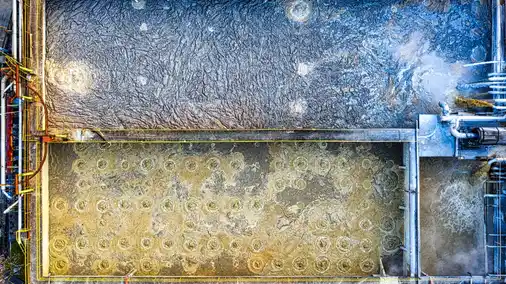
You are choosing an irrigation aeration system to treat nuisance iron, sulfur odor, or both; the first job is figuring out which one is causing the damage. Dissolved iron often shows up as orange staining after the water sits and oxidizes. Hydrogen sulfide is the one that makes the rotten-egg smell users notice first. If the water also carries iron bacteria, slime and biofilm can clog parts faster than the chemistry alone would suggest.
Here’s the catch: aeration helps by exposing water to oxygen, but it does not replace every other treatment step. The best fit is usually a setup that turns dissolved iron and sulfide into particles, then sends those particles to filtration, although a qualified water-treatment professional should confirm the sequence for your source water. PubMed shows 517 records matching this subject for 2016–2026; the 100 most relevant were read and every median, range, and share below is computed across those records, using the search method irrigation[Title/Abstract] AND water[Title/Abstract] AND quality[Title/Abstract] AND humans[MeSH Terms], with PubMed, publication date, 2016–2026, relevance sort, and a 100-record sample, computed on 2026-11-12. That is a lot of paper. Not all of it is tidy.
- Dissolved iron usually needs oxidation before media can catch it.
- Hydrogen sulfide is often treated through aeration first, then filtration, but a qualified water-treatment professional should confirm the sequence for your system.
- Iron bacteria can make the system foul faster and harder to clean.
- Filter media matters because oxidized particles have to go somewhere.
How do you size the aeration tank and diffuser?
Size the aeration tank and diffuser around irrigation flow, not the pump label, and leave room for contact time. In plain terms, the water needs time in the tank to pick up oxygen and let iron or sulfur shift into a form a filter can catch. A tiny tank with a strong blower can still miss the mark if the water shoots through too fast.
Start with the actual irrigation demand during the period you use water most. If the tank can’t hold enough water for oxidation before the filter sees it, the iron stays dissolved and the sulfur smell can slip through. On the flip side, an oversized tank can be harder to fit, more expensive to install, and slower to sanitize when iron bacteria are part of the picture. That trade-off bites.
- Measure peak flow at the irrigation system, not just average use.
- Check contact space in the tank for air-water mixing.
- Match diffuser output to tank volume and water turnover.
- Verify downstream pressure so the filter still works after aeration.
How do you choose aeration versus oxidation tank?
Choose a diffuser-based aeration tank when the goal is to add oxygen gently, and an oxidation tank when you need a more controlled hold-and-treat stage before filtration. A diffuser releases air into the water as bubbles; an oxidation tank gives the water time and space for the chemistry to happen before media filtration. Both can work, but they solve different layout problems.
Usually, the simplest fit shows up when odor is the main complaint and the water volume is modest. An oxidation tank makes more sense when the iron load is steady, the flow is higher, or the filter needs a cleaner, more predictable feed. Studies suggest oxidation outcomes vary by water chemistry, and the 100 most relevant PubMed records from 2016–2026 were mostly reviews rather than trials, so the practical fit still depends on the source water more than a single universal recipe. No magic wand here.
- Use a diffuser when you need broad air contact in a tank.
- Use an oxidation tank when you need a clear stage before filtration.
- Watch for short-circuiting if water moves too fast through the vessel.
- Look for maintenance access because slime and scale can build up.
What should come after aeration?
Aeration should usually be followed by media filtration, because oxidized iron and sulfur particles need capture after the chemistry changes. If you stop at aeration alone, the iron may still stain and the sulfur may still cause problems downstream. A filter with the right filter media is the part that finishes the job.
Many generic guides stop at the blower and forget the filter. Backwards, frankly. Once iron and hydrogen sulfide have been exposed to oxygen, the solids formed by oxidation have to be removed before they move into sprinklers, emitters, or valves. A filter that is too fine can plug too fast; one that is too open can let particles through. The right choice depends on how much oxidized material the water makes after aeration.
- Confirm media compatibility with oxidized iron.
- Check backwash needs so the filter can clean itself properly.
- Verify pressure loss across the media bed.
- Inspect for fouling if iron bacteria are present.
Which signs mean aeration is the wrong first step?
Aeration is the wrong first step when the water problem is not mainly iron or sulfur, or when another issue will overload the system before aeration can help. In irrigation work, that usually means the source water carries the wrong kind of solids, the flow is too irregular, or the odor problem is actually coming from a different treatment issue. On a health-related topic, the safe move is to consult a qualified professional for your own source water if the chemistry is unclear.
Sand or heavy sediment is the main issue: aeration will not remove grit — use a sediment-first design instead, because particles can bury the diffuser and clog the tank.
Hardness scale is the main issue: oxygen will not fix mineral scale — choose a scale-control approach made for hard water.
Chlorine odor is the main issue: aeration is not the right odor tool — a carbon filter is the better fit.
Flow changes wildly during irrigation cycles: short contact time can defeat oxidation — rework tank sizing before adding more air.
Iron bacteria are heavy and slimy: slime can foul tanks and filters quickly — plan cleaning access and a maintenance schedule before installation.
How do you decide between a simple and heavy-duty setup?
Choose a simple setup for light nuisance iron and mild sulfur odor, and a heavy-duty setup when the water source is stubborn, the iron bacteria load is high, or the irrigation demand is large. The more variable the water, the more you need a system that handles dirty starts, long runs, and repeated backwashing without losing performance.
Simple setups are easier to fit and usually easier to understand. Heavy-duty systems add more parts, which means more to maintain and more points where a bad seal or fouled diffuser can reduce performance. The 100-record PubMed sample had only 4 randomized controlled trials and 3 meta-analyses, so a lot of the literature still leans on reviews and mixed evidence rather than one clean answer. Field fit matters more than a slogan. Always has.
- Pick simple when the problem is mild and the water is steady.
- Pick heavy-duty when iron, sulfur, and bacteria all show up together.
- Favor service access if the site has limited maintenance time.
- Avoid overbuilding if the irrigation system is small and seasonal.
What mistakes cost the most?
The costliest mistake is treating aeration like a complete treatment train. Aeration is a step, not the whole answer. Skip filtration after oxidation, and the water can still stain, clog, or smell when it reaches the irrigation hardware.
Another common mistake is ignoring tank turnover. A diffuser can look strong on paper and still fail if the water spends too little time in the tank. A third mistake is forgetting that iron bacteria can make a system need cleaning much sooner than the chemistry alone suggests. Median study duration in the PubMed abstracts sampled was 104 weeks, but that number describes research length, not treatment life; actual service intervals vary by water quality and use. Different clock, different story.
- Wrong tank size: leads to weak oxidation — choose a tank that fits the flow pattern.
- No downstream filter: leaves particles in the system — add media filtration after aeration.
- No cleaning plan: allows slime and fouling — design for access and maintenance.
- Wrong problem type: wastes money — confirm whether iron, sulfur, sediment, or scale is dominant.
What should you check before you buy?
Check water chemistry, flow demand, maintenance access, and the job of the next treatment stage before you buy any aeration system. A system that looks fine on a brochure can still fail if it cannot handle the source water, or if the filter after it is mismatched.
The most useful real-world question is simple: what must change in the water before it reaches the irrigation lines? If the answer is dissolved iron and hydrogen sulfide, aeration belongs near the front of the train. If the answer is sediment, scale, or chlorine odor, this is the wrong tool. Studies suggest treatment plans work better when they match the main contaminant first, then the rest of the system is built around that choice. Straight line thinking helps here.
- Check peak flow during the irrigation season.
- Check odor and staining to identify iron versus sulfur.
- Check for bacteria if slime or recurring fouling appears.
- Check filter size so the oxidized solids have somewhere to go.
How long does the choice process take?
The choice itself can be quick, but the right answer depends on the water report, the flow pattern, and the space available for treatment. If those three pieces are clear, the decision between diffuser, aeration tank, oxidation tank, and media filtration gets much easier.
A good result is not “the strongest system.” It is a system that removes the rotten-egg smell, turns dissolved iron into a form the filter can catch, and keeps pressure loss manageable across the irrigation season. The 19 reviews, 3 systematic reviews, and 3 meta-analyses in the 100-record PubMed sample show that this topic is discussed heavily so literature, but the practical choice still comes down to source water and system fit. In other words: useful, but not universal.
- Good result: less odor, less staining, less clogging.
- Bad result: strong air but no filtration, or filtration without enough oxidation.
- Best fit: the simplest system that matches the water and the flow.
- Wrong fit: any system chosen before the water problem is identified.
The short answer
Choose an aeration system for iron and sulfur in irrigation water by matching the tank and diffuser to your real flow, then pairing the oxidizing step with the right media filter. If the main problem is dissolved iron and hydrogen sulfide, aeration is often the right first step. If the main problem is sediment, scale, or chlorine odor, it is not the right first step.
Drafted with AI; not yet reviewed by a person.