Last updated: November 02, 2026
Quick answer: for many homes, smart irrigation controls can cut wasted watering by adjusting schedules in real time, and this guide compares the main options in a clear way. Smart irrigation controls and automation — The Complete Guide is for the person deciding whether to keep a basic timer, move to a weather-based controller, or pay for app-connected automation. I write about water systems, controls, and home automation for a living, and this guide focuses on the choice that fits the site.
Key takeaways
- Smart irrigation pays off when schedules need to change with weather, plant type, or local rules.
- The real choice is not “smart or not smart”; it is weather-based scheduling vs. sensor-driven automation.
- Weather-based controllers are easier to run and usually fit most home lawns.
- Sensor-driven systems make more sense when the site is uneven, shaded, container-heavy, or plant-sensitive.
- The right system is the one that matches the site’s zones, valve setup, and tolerance for ongoing maintenance.
- Bad installs still fail fast: weak Wi‑Fi, ignored seasonal adjustments, and poor zone mapping can erase the benefit.
What smart irrigation controls actually do
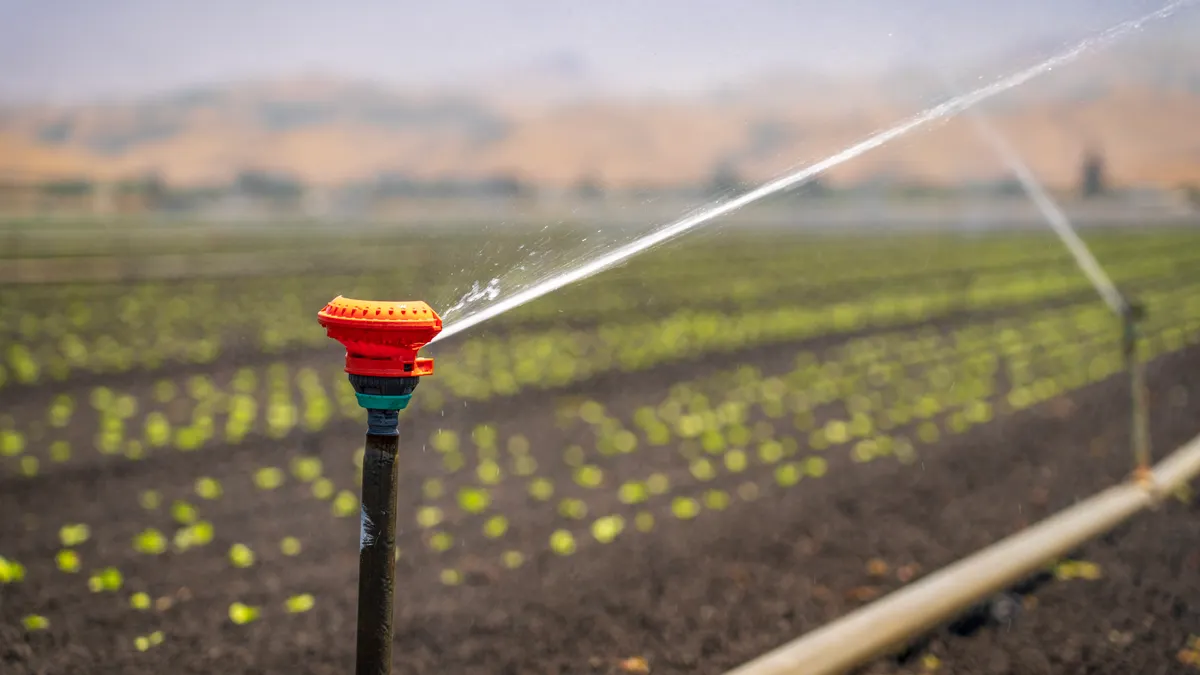
Smart irrigation controls replace fixed, clock-based watering with scheduling that changes based on conditions. A conventional timer runs a zone because it is 6:00 a.m. on Tuesday. A smart controller may delay that zone because a rain sensor is wet, shorten runtime because the soil is already moist, or extend intervals after a hot stretch.
That sounds obvious, but the important detail is this: not every “smart” controller does the same job. Some products only add Wi‑Fi and phone control to a basic timer. Others use local weather data, evapotranspiration logic, or on-site sensors to decide when and how long to water. The difference matters because app control alone is convenience, not conservation. A controller that can be opened from a phone still needs a scheduling brain if it is going to save water.
A useful baseline is the EPA’s WaterSense controller program, which sets performance criteria for weather-based irrigation controllers. If a controller is WaterSense labeled, it has passed a third-party certification process tied to irrigation efficiency expectations. For buyers, that label is a stronger signal than a glossy app screenshot. See the EPA’s WaterSense controller page: https://www.epa.gov/watersense/controllers
The basic building blocks are usually these:
- Controller: the brain that opens and closes zones.
- Valves: the electromechanical parts that send water to each zone.
- Sensors: rain, soil moisture, flow, or freeze sensors.
- Connectivity: Wi‑Fi, Bluetooth, or sometimes no internet at all.
- Software: the app or web dashboard used to set schedules and view alerts.
The question is not whether automation sounds modern. The question is whether the site has enough variability that fixed schedules are a bad fit. If the answer is yes, smart control is not a luxury. It is a practical way to stop watering the same amount in June, October, and the first week after a storm.
Weather-based controllers vs. sensor-driven systems: what’s the real difference?
Weather-based controllers win for most ordinary lawns; sensor-driven systems win when the site itself is the problem. That is the shortest honest version.
Weather-based controllers use local weather data, either pulled from an online service or calculated through a built-in model, to adjust runtime. They usually work best on yards with standard turf zones, predictable sprinkler coverage, and a homeowner who wants less manual fiddling. The upside is simple: once tuned, they can run on a mostly hands-off schedule and still react to rain, temperature swings, and seasonal shifts.
Sensor-driven systems make decisions from conditions at the site. A soil moisture sensor can prevent irrigation because the root zone is already wet. A rain sensor can stop a cycle after precipitation. A flow sensor can catch a broken line or stuck valve by spotting abnormal flow. This is more precise, but it is also more demanding. Sensors need placement, calibration, batteries or wiring, and occasional attention.
The trade-off is not abstract. Weather-based control is easier to set up and easier to explain to a homeowner. Sensor-driven control is better when the landscape has microclimates, slopes, shaded beds, mixed planting types, or places where a weather service is not enough. A north-facing strip that stays damp and a sun-baked side yard do not deserve the same schedule, and a moisture sensor can catch that difference better than a weather forecast.
Here is the practical split:
- Choose weather-based control if the property is mostly turf, the irrigation zones are cleanly divided, and the main goal is a better default schedule.
- Choose sensor-driven automation if the irrigation system serves garden beds, containers, slopes, or problem zones that dry at very different rates.
- Avoid both if the current valve layout is broken, unlabeled, or too inconsistent to map cleanly. Automation cannot fix a bad hydraulic design.
One more issue matters: local rules. Many municipalities and water districts set watering days, seasonal restrictions, or odd-even limits. A smart controller can help comply with those limits, but only if it is programmed correctly. If the site is in a regulated area, the controller should be able to keep schedules narrow and predictable rather than improvising every day.
The real difference is not intelligence. It is control philosophy: estimate demand from weather, or measure need at the site. That choice determines how much setup you inherit for the savings you get.
Which type of smart controller fits your property?
Weather-based controllers fit the broadest set of homes, but they are not the right answer for every property. The right controller depends on zone count, plant diversity, and how much maintenance the owner will actually perform after installation.
A basic suburban lawn with 4 to 8 zones is the easiest win for weather-based automation. These systems are built for turf, shrubs, and a small number of sprinkler schedules. If the controller can pull local weather data and adjust seasonal runtime, it usually solves the biggest waste problem: overwatering after rain or during cooler periods. The app can remain a convenience feature instead of the main reason to buy.
Sensor-heavy systems are the better choice when the property stops acting like a standard lawn. A mixed landscape with drip irrigation, raised beds, shaded corners, and slope runoff creates uneven moisture patterns that a weather feed cannot fully capture. Soil sensors and flow alerts matter here because the site itself tells the truth faster than a calendar does. For example, a garden bed that dries in six hours may need a different rule than turf that holds moisture for 24 hours.
A commercial site or larger residential estate often needs a controller that can handle more zones, separate seasonal programs, and alerts for valve faults. In that case, the software matters as much as the hardware. The interface has to let a caretaker or manager see which zones are running, where runtime changed, and whether a sensor override is active. If the dashboard is cluttered, the system turns into a box nobody trusts.
There is also a category many buyers underestimate: the “almost smart” controller. This is a timer with a phone app and little else. It can be useful if remote access is the only thing missing from the existing setup, but it is not a real automation upgrade. It may still require manual seasonal edits and still ignore local moisture conditions. That makes it less interesting for conservation and more useful for convenience.
The most honest rule is this:
- If the landscape is simple, buy the control layer that automates weather response.
- If the landscape is complicated, buy the control layer that adds sensors.
- If the existing system has chronic wiring, pressure, or coverage problems, fix the irrigation hardware first.
A smart controller should match the landscape’s complexity, not the owner’s appetite for gadgets. Buying a high-end automation platform for a two-zone front yard is overkill. Buying a simple Wi‑Fi timer for a slope with runoff is a false economy.
The honest side-by-side
Weather-based controllers are the safer purchase for most homes, while sensor-driven systems are the better long-term answer for difficult landscapes. The table below shows where the choice actually changes.
| Criteria | Weather-based controller | Sensor-driven system | Winner for [condition] |
|---|---|---|---|
| Setup effort | Usually simpler; often works off local weather and seasonal settings | Usually more setup because sensors must be placed and sometimes calibrated | Weather-based, for quick installs |
| Best use case | Standard lawns and straightforward zones | Mixed beds, slopes, containers, and uneven moisture conditions | Sensor-driven, for variable sites |
| Maintenance | Lower if the weather feed is reliable | Higher because sensors can fail, shift, or need replacement | Weather-based, for low-touch ownership |
| Precision at the plant level | Good for general scheduling, not perfect for microclimates | Better because it measures the site directly | Sensor-driven, for precision needs |
| Dependence on internet | Some models need it for weather data and alerts | Some can work locally; some still need cloud features | Sensor-driven, when connectivity is flaky |
| Conservation potential | Strong when tuned well and used with local weather rules | Stronger when soil conditions vary a lot | Sensor-driven, for complex landscapes |
| User experience | Usually easier for homeowners to understand | Can be harder to explain if multiple sensors feed one schedule | Weather-based, for simplicity |
| Failure mode | Bad weather data or poor seasonal settings | Bad sensor placement or sensor drift | Weather-based, for fewer moving parts |
| Cost of ownership in practice | Often lower ongoing effort | Often higher ongoing attention | Weather-based, for routine homes |
The table is not saying one class is “better” in the abstract. It is saying the winner changes with the job. A homeowner trying to stop obvious waste usually wants weather-based automation. A property manager or serious gardener with inconsistent zones usually needs sensors.
The big hidden risk on both sides is bad commissioning. A controller can only be smart if zones are labeled correctly, runtimes are tied to real sprinkler output, and the schedule is checked after the first few weather changes. If nobody verifies that the controller is actually skipping or shortening runs, the automation becomes decorative.
Why weather-based controllers are the default recommendation
Weather-based controllers win by default because they solve the most common problem with the least complexity. Most home irrigation systems are not precision agriculture. They are a few turf zones, maybe some shrubs, and a schedule that was set once and forgotten. For that job, using weather data to adjust runtime is a cleaner fix than adding a sensor network.
The strength of this category is that it reduces waste without forcing the owner to understand every square foot of the landscape. Local weather information can account for rainfall, temperature, and seasonal shifts. That is enough to stop the classic mistake of watering through cool weather or right after a storm. The EPA’s WaterSense framework is useful here because it signals that the controller is designed around water-efficiency principles rather than just remote access. For a homeowner, that means one device can handle a routine 7-day schedule and then adapt it.
These controllers also have a practical advantage in the real world: they are easier for contractors to install and easier for homeowners to maintain. If the app is clear, the user can make seasonal changes from a phone instead of walking to a garage panel. That sounds minor until the controller is mounted in a tight utility closet or on a wall nobody wants to reach. It also helps when the system has 4 zones rather than 12, because fewer zones are easier to audit.
The weakness is equally real. Weather-based logic is only as good as the system around it. If the sprinklers are uneven, the heads are clogged, the pressure is wrong, or one zone covers both shade and full sun, no weather service can fully correct that. A controller can reduce overwatering, but it cannot repair poor irrigation design. It also cannot tell whether a shaded bed is still damp if the forecast looks dry.
This category is wrong for owners who want the controller to make site-specific decisions at the root zone. It is also a poor fit for landscapes with frequent microclimate shifts, steep slopes, or lots of hand-planted material that does not behave like turf. In those cases, the smart default is not smart enough.
Use weather-based control if:
- the property is mostly turf or similar plants,
- the zones are already well separated,
- the owner wants a cleaner schedule more than a high-control dashboard,
- and the main goal is practical water savings with minimal daily attention.
The honest downside: it may still ask for occasional manual tuning when the seasons shift or a weather source behaves poorly. That is not a defect so much as the cost of using a generalized model.
Why sensor-driven automation wins on difficult landscapes
Sensor-driven automation wins when the landscape is the real variable. A weather feed can estimate demand, but a moisture sensor tells the controller what the soil is doing right now. That difference matters most in places where one irrigation zone contains multiple plant types, or where slope and shade create uneven drying.
A soil moisture sensor is the clearest example. It can block a cycle if the root zone still has usable moisture, which is useful after rain, during cool spells, or in heavier soils that hold water longer. A flow sensor adds another layer of value by spotting unusually high flow or continuous flow that may indicate a broken line, a stuck valve, or a leak. That turns automation into protection, not just scheduling. In a large yard, that can also mean fewer surprise repairs.
The upside is accuracy. The downside is ownership burden. Sensors have to live somewhere on the property, and placement affects the quality of the reading. A sensor in the wrong spot will teach the controller the wrong lesson. Batteries, wiring, debris, and root growth all create maintenance chores that a weather-only system largely avoids. According to the EPA, WaterSense-certified controllers are tested against irrigation-efficiency criteria, but field performance still depends on installation.
Sensor-driven systems are also less forgiving of casual setup. If the user does not understand the site’s soil type, root depth, or sun exposure, the logic can become too aggressive or too conservative. That can leave plants underwatered in one bed and overwatered in another. It is a better tool, but only in the hands of someone willing to tune it. For a site with three very different moisture zones, that extra tuning can be the difference between stress and stability.
This is the wrong category for a small, ordinary lawn where the owner wants set-and-forget behavior. It is also a questionable buy if the irrigation system itself is still unstable. A sensor cannot compensate for mismatched nozzles, broken heads, or poor coverage.
Use sensor-driven automation if:
- the site has mixed moisture behavior,
- water loss from runoff or overwatering is a recurring problem,
- a leak or stuck valve would cause real damage,
- or the owner is willing to check sensors and adjust placement at least seasonally.
The honest reason to pick this path is not novelty. It is that the landscape needs direct measurement, not an estimate. When the site varies enough, measurement beats prediction.
How to choose the right platform without overbuying
Choose the simplest controller that solves the site’s real problem, not the one with the longest feature list. That is the rule that keeps buyers from paying for automation they will never use.
Start with the irrigation system itself. Count zones, identify valve locations, and check whether the existing wiring is healthy. A 6-zone system with clean separation is a very different project from a 14-zone layout with mixed drip and spray. If the system is small and standard, a weather-based smart controller is usually enough. If the system is irregular, sensor support becomes more valuable.
Then check connectivity. Some controllers depend heavily on cloud services and app access. That can be fine in a house with stable Wi‑Fi and a user who likes phone control. It is a bad fit for a garage with weak signal or for an owner who wants local control even if the internet drops. The software model matters here as much as the irrigation logic. For example, a controller with 2.4 GHz Wi‑Fi may work well in a detached garage if the signal reaches it, but it will still fail if the network is unreliable.
Next, ask what kind of “automation” is really needed:
- Remote access only: useful for travel, but not true irrigation intelligence.
- Weather adjustment: the best baseline for most homes.
- Moisture sensing: the best fit for variable plantings and difficult sites.
- Flow monitoring: valuable where leaks are costly or hard to notice.
- Seasonal programming with alerts: a good middle ground for many suburban systems.
Compatibility matters too. A smart controller should work with the existing valves and wiring standard, and the installer should confirm whether additional accessories are needed. A controller that promises automation but needs expensive extras to become useful is not automatically a better buy. The same is true if a device is locked to one app ecosystem but the rest of the house uses a different platform.
One last filter is the maintenance promise. If the owner or facility staff is not going to inspect sensors, verify schedules, or review alerts, then a highly advanced system is a poor choice. The right product is the one that matches the attention the site will actually get. A simpler controller used correctly beats a sophisticated one ignored for six months.
When to reconsider smart irrigation entirely
Smart irrigation is not the answer if the underlying system is too broken to trust. If coverage is poor, heads are damaged, pressure is wrong, or the layout no longer matches the landscape, automation can only make a bad system fail faster.
That warning matters because automation assumes a baseline of functional hydraulics. A controller can shorten run times and react to weather, but it cannot fix dead zones, overspray onto pavement, or a clogged drip line. If the landscape still needs a redesign, the first dollar should go to hardware, not software.
There are also cases where a smart controller adds little value:
- Very small irrigation systems with one or two simple zones.
- Sites that are manually watered by design and change constantly.
- Properties where the owner will not maintain Wi‑Fi, sensors, or app access.
- Places with severe installation limits that make sensor placement impractical.
A traditional timer is still acceptable when the property is simple and the owner already adjusts it manually with the seasons. That is not glamorous, but it is honest. A basic controller used well is better than a smart one left on factory defaults.
If the property is larger or under stricter watering rules, smart control becomes more compelling. For example, municipal conservation programs and local water restrictions often make better scheduling not just useful but necessary. In that setting, the automation does practical work: it helps keep schedules aligned with the rule set without asking someone to remember every seasonal change. WaterSense guidance from the EPA also shows why these controllers are built around efficiency, not just convenience.
The decision to skip smart irrigation should be based on one of two things: the system is too flawed to automate, or the site is simple enough that automation brings little return. That is a real recommendation, not a cop-out.
The verdict: which one to choose and why
Choose weather-based control if the property is a normal residential lawn with cleanly separated zones, stable Wi‑Fi, and an owner who wants a low-maintenance way to reduce waste. Choose sensor-driven automation if the landscape has mixed plant types, slopes, shaded pockets, containers, or a history of overwatering and runoff. Neither if the irrigation hardware is already failing, the zone layout is wrong, or the owner will not maintain sensors or connectivity.
That is the cleanest decision rule because it matches the tool to the job. Weather-based systems are the smarter default for most homes. Sensor-driven systems are the better specialist tool when the site itself creates the problem. A controller that only adds app control is not enough to call the system truly smart, and a dense sensor setup is not worth the hassle on a simple lawn.
If the reader wants one sentence to keep: buy the least complicated automation that can still respond to the site’s real moisture behavior.
Drafted with AI; not yet reviewed by a person.