Last updated: November 02, 2026
Quick Answer: For Should You Use a Rain Barrel or Cistern for Irrigation?, a rain barrel is usually the better fit for 50 gallons of simple, gravity-fed watering; a cistern is the better fit when you need more than 100 gallons of storage, steadier pressure, or longer dry spells bridged. If the goal is to keep beds, containers, or a small vegetable patch going, the choice usually comes down to storage volume, elevation, and how much plumbing you are willing to build.
I write on irrigation system planning and rainwater storage design, so I can be blunt about Should You Use a Rain Barrel or Cistern for Irrigation?: a barrel is simpler, cheaper to set up, and easier to fit under a downspout; a cistern handles a real garden load better, but it asks for more space, more filtration, and usually a pump if the outlets are not high enough.
Key takeaways
- A rain barrel fits small, close-range irrigation; a cistern fits bigger planting areas or longer dry spells.
- Gravity-fed use is the simplest path, but only if the outlet sits above the beds or hose line.
- A first-flush diverter and a screen or filter matter in both setups because roof debris and sediment clog valves fast.
- Overflow planning is not optional; excess runoff needs a safe path away from foundations and planting beds.
- If the system must feed a sprinkler zone, the storage tank choice is only part of the design.
- If the roof is small and the garden is thirsty, a cistern is usually the smarter long-term choice.
What is the real difference between a rain barrel and a cistern?
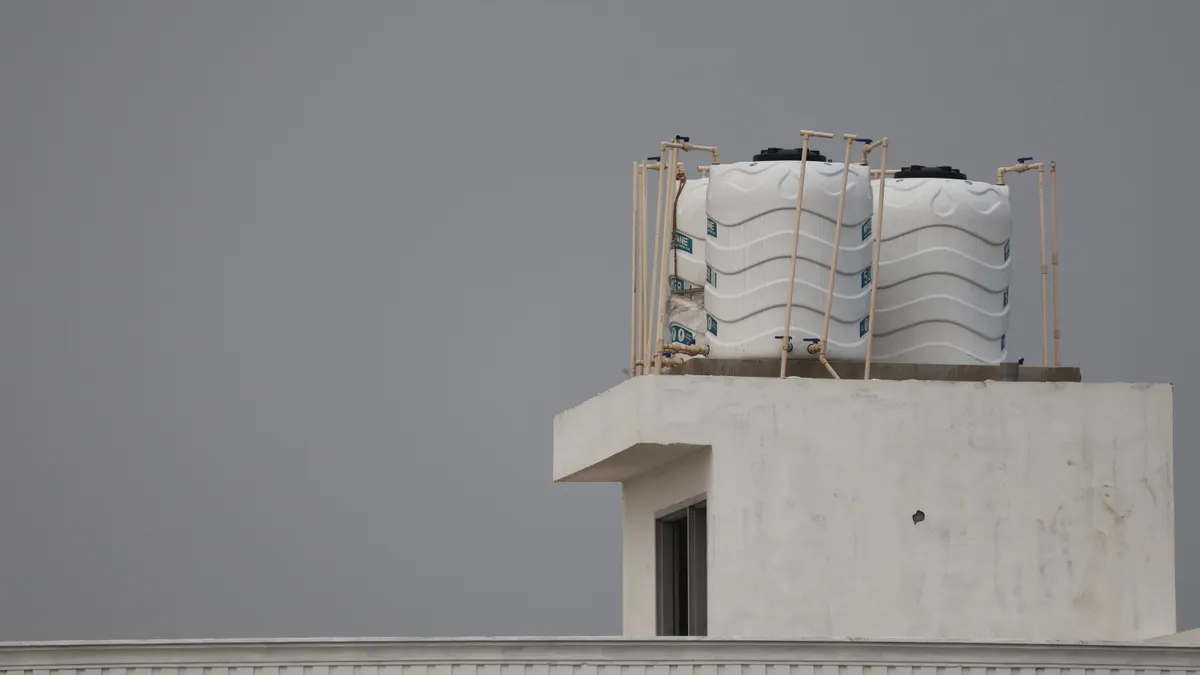
A rain barrel is the right choice when the irrigation target is small and the plumbing stays simple; a cistern is the right choice when storage size and distribution matter more than convenience. The difference is not just capacity. It is how the whole setup behaves after the rain stops.
A typical rain barrel is a compact tank placed beside a downspout. It usually sits on a stand so a hose bib or spigot can drain by gravity. That works well for hand watering, short hose runs, and low-pressure drip irrigation. According to the U.S. Environmental Protection Agency, rain barrels are commonly used for smaller-scale capture and reuse. The catch is obvious: the tank empties fast if you try to cover a large bed or a hot, windy week.
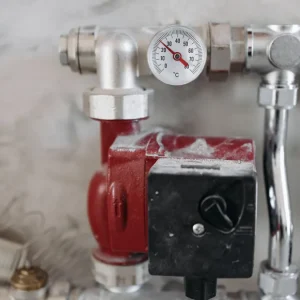
A cistern is a larger storage vessel, often buried or tucked out of sight, and often tied to a pump, a pressure tank, or a more elaborate distribution line. That makes it better suited to a system that feeds multiple zones or needs a steadier supply. The cost in complexity is real. More fittings mean more points of failure, and larger storage means sediment control matters more.
For this page’s purpose, the simplest way to think about it is this: a barrel is a short-term buffer; a cistern is storage you can build around. The hub on system design and planning belongs here because the storage choice only makes sense when matched to roof catchment, garden area, and the delivery method.
The most useful distinction is that a barrel can often be installed with a downspout diverter and a basic screen, while a cistern usually needs a filter, an overflow route, and a defined plan for moving stored runoff to the garden.
Rain barrel: who should actually use it, and who should skip it?
A rain barrel wins for a small yard with beds close to the house and a gardener who wants the least complicated setup. It is the better choice when gravity-fed irrigation is enough and when one container, not a whole network, needs support.
The strength of a barrel is its narrow job description. It collects from one downspout, stores a modest amount, and gives you a simple way to water by hand or feed a short drip line. A 50-gallon barrel, for example, is easy to place beside a downspout and easy to inspect for screen clogs, mosquito entry, or overflow issues. That kind of volume is practical for herbs, annuals, and a few raised beds, not for a broad landscape.
The downside is just as clear. A barrel runs out quickly, especially in midsummer. If you are trying to irrigate several zones, the stored supply disappears before it can matter. The low head pressure also limits what the outlet can do. Gravity is free, but it is not strong. If the hose must climb, or if the emitters need pressure that a simple raised tank cannot provide, the barrel stops being a good fit.
A rain barrel is also a poor choice when the downspout receives heavy leaf debris or roof grit and there is no room for a proper first-flush diverter and screen. Without those parts, the barrel becomes a sediment trap. The water may still be useful for ornamentals, but maintenance becomes the job.
The ideal user is the homeowner who wants to irrigate a modest planting area, can place the barrel on a stable stand, and is happy to use a hose or short drip run. The wrong user is the gardener who expects it to behave like a utility tank. It will not.
The technical details worth watching are simple: a downspout diverter, a fine screen, an overflow outlet, and a hose connection that sits above the planting area. If one of those is missing, the system tends to fail in annoying ways rather than dramatic ones.
When does a cistern make more sense?
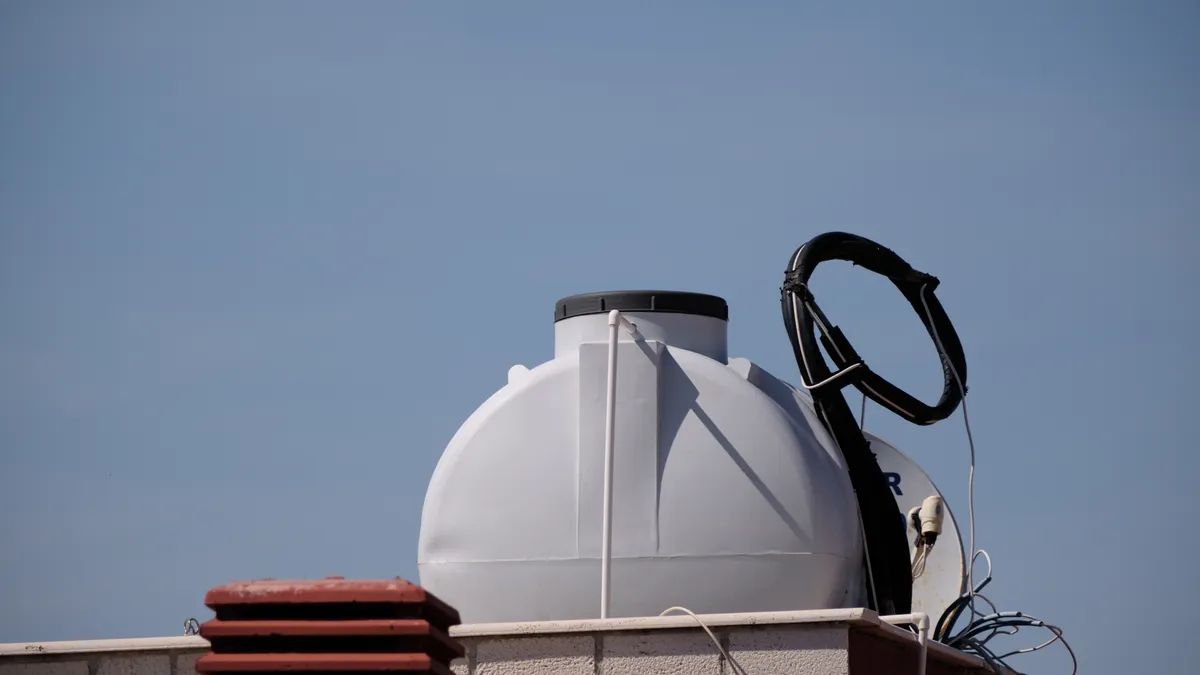
A cistern is the better choice when the storage requirement is larger than a barrel can realistically cover or when the garden layout needs more controlled delivery. It wins for bigger planting areas, longer dry periods, and systems that need the water source separated from the visible garden edge.
The main advantage is capacity. A cistern can collect much more runoff from the same roof, so a single storm can carry a larger share of the season’s irrigation burden. That matters when the garden is not a few pots and beds but a broader landscape with trees, shrubs, or several drip zones. The larger tank also reduces the constant cycle of emptying and refilling that makes small barrels feel perpetually depleted.
A cistern also gives more flexibility in placement. Because it can be buried or otherwise out of the way, it does not have to sit at every downspout. That helps on sites where curb appeal matters, where there is no safe spot for a visible barrel, or where a larger tank needs to be connected to multiple collection points.
The trade-off is that a cistern is less forgiving. It usually needs a more serious filter, a first-flush diverter, careful overflow management, and often a pump if the irrigation line needs more than gravity can provide. That is not a small detail. It is the difference between a system that you can leave alone and one that needs a real maintenance habit.
A cistern is also the better answer when the roof catchment and garden demand are mismatched. If the landscape needs a meaningful reserve, a 50- to 100-gallon barrel will only create a false sense of security. A cistern is not inherently “better,” but it is honest about the scale of the job.
The reader who should choose a cistern is the person with space for a larger tank, a bigger irrigation target, and a willingness to manage filters and overflow the right way. The reader who should skip it is the person who wants a quick weekend install and only needs to keep a few beds alive.
The honest side-by-side
A barrel wins on simplicity; a cistern wins on usable storage and system flexibility. The table below is the cleanest way to decide.
| Criteria | Rain barrel | Cistern | Winner for [condition] |
|---|---|---|---|
| Typical scale | Small garden, a few beds, containers | Larger garden, multiple zones, longer reserve | Cistern for bigger irrigation loads |
| Storage capacity | Limited; empties fast under steady use | Much larger; better buffer between storms | Cistern when drought gaps matter |
| Gravity-fed use | Easy to set up if raised | Possible, but often less practical alone | Rain barrel for simple hand watering |
| Need for pump | Often avoidable | Common when outlets are low or zones are spread out | Rain barrel for no-pump simplicity |
| Filtration demand | Basic screen may be enough in clean roof conditions | More important because larger volume traps more debris | Rain barrel for low-maintenance simplicity |
| First-flush diverter | Helpful | Strongly recommended | Cistern for roof runoff management |
| Overflow management | Easier to route away from foundation | More critical because more runoff is collected | Cistern when site drainage is planned well |
| Visual footprint | Visible beside the downspout | Can be buried or hidden | Cistern for tight curb-appeal sites |
| Installation complexity | Lower | Higher | Rain barrel for quick setup |
| Long-term system expansion | Limited | Better foundation for more plumbing later | Cistern for future growth |
A plain reading of the comparison points to the same conclusion every time: the barrel is for convenience, and the cistern is for scale. The decision changes only when the site is tiny, the garden demand is low, or the owner wants the least plumbing possible.
Rain barrel setup: the specific places it wins
A rain barrel wins when the system must be understandable at a glance and maintainable without special tools. That makes it a strong fit for first-time rainwater storage users, renters with permission to install one unit, and gardeners who mainly want a gravity-fed source for watering cans or a short drip line.
The practical strengths are concrete. A barrel paired with a downspout diverter can capture roof runoff from one collection point without redesigning the whole drainage system. Add a first-flush diverter and a screen, and the setup can keep leaves, grit, and the dirtiest initial runoff out of the tank. That matters because a small tank is easier to keep clean than a large one with hidden sediment pockets.
The weakness is just as concrete. A barrel’s limited volume means it works best as supplemental irrigation, not as the only source for anything larger than a modest planting area. If the summer pattern stretches dry, the tank becomes an accessory rather than a reserve. That is fine if the goal is supplemental watering. It is a problem if the goal is reliability.
A barrel also asks for discipline in overflow planning. Once full, it must send excess runoff somewhere safe, not toward the foundation or into a path where it erodes mulch and soil. Even a compact tank needs a real overflow outlet, not a casual drain onto the ground.
For a setup under roughly one roof downspout and a small irrigation demand, the barrel is the cleanest solution. It is not glamorous. It is just appropriately sized.
Cistern setup: the specific places it wins
A cistern wins when the irrigation demand is large enough that small storage stops being useful. That includes larger vegetable plots, mixed borders, orchards, and yards where the owner wants a buffer that lasts beyond the next shower.
The biggest advantage is resilience. A cistern lets runoff from one or more roof sections do more work before the weather turns dry again. That extra reserve matters in climates with uneven rainfall or in properties where the garden cannot be watered by hose every few days. It also gives more room for filtered storage, which can improve the quality of the collected runoff before it reaches emitters or hoses.
Cisterns also make better long-range planning possible. If the garden may expand, a cistern gives a foundation that can accept more lines, more storage, and more formal distribution later. That is why cisterns belong in serious system design, not just in a list of storage containers.
When that storage grows, the foundation and site layout matter too. A cistern usually means a more involved installation, more attention to filtration, and a more deliberate approach to overflow management. If it is buried, access for cleaning matters. If it is aboveground, visibility and space become real constraints.
A cistern is the right answer when the goal is to store enough runoff to matter, not just to save a few watering trips. If that goal is absent, the cistern can become an oversized answer to a small problem.
What makes the choice flip?
The verdict flips in four common situations. First, if the garden is tiny and the roof is clean and simple, a barrel is enough even if a cistern sounds more “serious.” Second, if the site is large but the owner will not maintain filters, screens, and overflow routes, neither option is a good fit because neglected storage turns into maintenance trouble.
Third, if the irrigation method is mostly gravity-fed and the output point is low, a barrel often wins because it is easier to raise and easier to understand. Fourth, if the garden needs a distributed system with longer runs, multiple beds, or storage that has to last through dry spells, the cistern wins even if the install is more demanding.
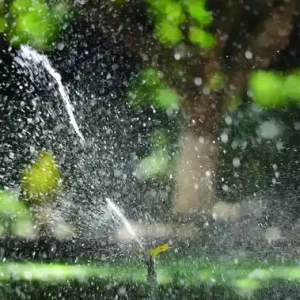
There is also one practical caution worth stating plainly: if the current plan assumes sprinkler-style coverage from stored runoff, storage size alone does not solve that problem. The layout, elevation, and delivery method still control what the system can do. The storage vessel is only one part of a larger design.
For readers who want the cleanest path, the question is not “Which is better?” It is “How much stored runoff do the plants actually need, and how much complexity is acceptable to get it there?”
The verdict: which one should you choose?
Choose a rain barrel if you need a simple, gravity-fed setup for a small garden, one downspout, and short irrigation runs. Choose a cistern if you need meaningful storage for a larger planting area, want better reserve between storms, or expect to build a more complete irrigation system around the tank. Neither if your site has no safe overflow route, no place for proper filtration, or no realistic plan for moving stored runoff to the plants.
What is the difference between a rain barrel and a cistern?
A rain barrel is a small storage tank for one downspout or a very limited garden area. A cistern is a much larger storage vessel meant for bigger runoff capture and more flexible irrigation use. The practical difference is that a barrel is usually gravity-fed and simple, while a cistern often needs more filtration, overflow planning, and sometimes a pump.
Can rainwater run sprinklers?
Sometimes, but stored runoff rarely behaves like a pressurized municipal supply. A sprinkler needs enough flow and pressure to operate correctly, so a storage tank alone is not the whole answer. For most small setups, drip irrigation or hand watering is a better match for a barrel or cistern unless the full system is designed around delivery requirements.
How do you connect stored rainwater to irrigation?
Start with a downspout diverter and a screened inlet, then route the stored water through the outlet that best matches the irrigation method. For a simple barrel, that may mean a hose bib and a short drip line. For a cistern, it may mean a pump, a filter, and a pressure line sized for the garden zones.
Drafted with AI; not yet reviewed by a person.