Last updated: November 12, 2026
Quick Answer: Need one starting point? Rotor heads are usually the safest all-around pick for clay turf, spray heads fit small loamy turf zones well, and drip emitters are generally best for beds and mixed plantings. This guide on How to Choose Sprinkler Head Types for Clay, Sandy, and Loamy Soil shows which sprinkler head type matches each soil and why a bad match wastes water.
Clay soil needs slower application. Sandy soil needs more frequent watering with less runoff. Loamy soil can handle the widest range of sprinkler head types. This guide shows which sprinkler head type fits each soil and why the wrong match wastes water.
Key Takeaways
- Clay soil favors low-output heads that give water time to soak in.
- Sandy soil usually does better with shorter spray cycles or drip, not wide spray.
- Loamy soil is the most flexible and can use spray, rotor, or drip depending on the zone.
- Rotor heads are a strong fit when a zone needs steady, slower delivery; spray heads fit quicker, lighter watering; drip emitters suit beds, shrubs, and mixed planting.
- The real decision is infiltration rate, not just plant type.
If you want the broader planning context, the hub on system design and planning explains how this choice fits into the whole irrigation layout.
What soil changes in a sprinkler choice?
Picture three dry-looking beds. Same yard, three different behaviors. Once water hits them, the differences show up fast. The right sprinkler head type is the one that matches how quickly your soil can take in water before it runs off or sinks past the roots.
Here’s the catch: one head can be fine in one zone and wrong in the next. Clay holds water near the surface, sand lets it drop fast, and loam sits in the middle. So the real match is soil intake speed, not the biggest spray pattern.
The practical ranking is simple:
- Clay soil: choose slower output, usually rotor heads or drip emitters.
- Sandy soil: choose short, lighter applications; drip emitters often work well.
- Loamy soil: choose the head that fits the plant and zone shape, since the soil can tolerate more options.
Generic advice often stops at “use low precipitation rate.” Helpful? Not really. You need a head that keeps water where roots can use it.
For a broader primer, see the EPA’s WaterSense guidance on irrigation efficiency and the sprinkler head types guide for matching heads to zones.
Clay soil: which sprinkler head type works best?
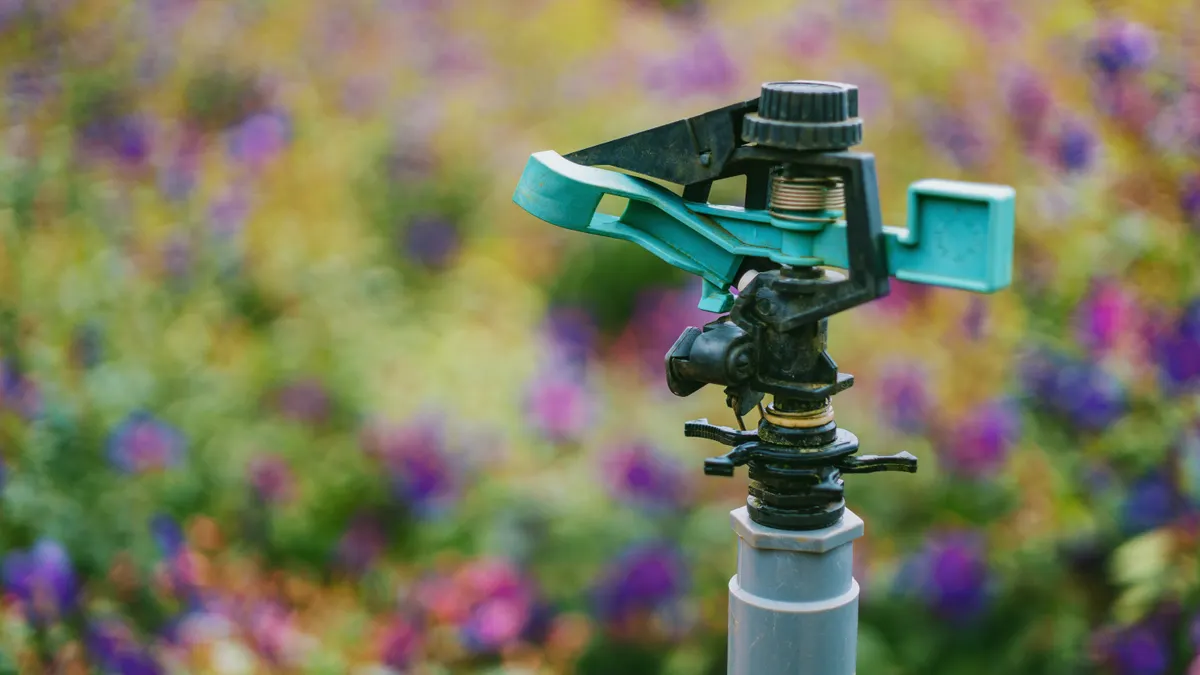
Clay soil usually does best with rotor heads or drip emitters. Both give water more time to soak in before the surface puddles. That slower delivery matters when the soil seals over and starts shedding water instead of absorbing it.
For lawn zones in clay, a rotor head is the safer pick. It throws water in a slower, rotating stream instead of a fast mist. Drip emitters are even better for beds and shrubs, because they put water right at the root zone with little splash or runoff.
Clay has one nasty habit: too much water too fast turns into runoff. Standard spray heads are usually a poor first choice for heavy clay unless the zone is tiny and run in short cycles. Even then, cycle-and-soak programming matters.
According to the University of California Agriculture and Natural Resources, clay soils often need slower application rates to reduce runoff, and that is the main reason slower heads tend to perform better there.
Good fits for clay soil
- Rotor heads for turf areas
- Drip emitters for shrubs, trees, and beds
- Spray heads only when matched to short run times and small areas
What to avoid
- Broad spray patterns with long run times
- Heads that dump water faster than the soil can absorb
- One-time long cycles that leave water standing
For clay, the main question is not “What looks coverage-efficient?” It’s “What lets water soak in before it sheets off?” That is why drip and rotors rise to the top. Mud beats logic every time here.
Sandy soil: are spray heads a bad idea?
Usually, yes. Spray heads are a weak fit for sandy soil because the water can move through fast or disappear below the root zone before plants use it. Sandy soil needs shorter bursts, tighter control, and often drip emitters for better efficiency.
The problem with sand is not puddling; it’s loss. Water moves down quickly, so a long spray cycle can send moisture below the active roots. Rotor heads can work better than spray heads on turf because they apply water more slowly, but even then, the zone usually needs shorter cycles than loam.
Drip emitters are often the most controlled option for sandy beds and landscape islands. They apply water right where it belongs, and the slower feed helps plants use more of it before it drains away.
For context, the Irrigation Association notes that matched precipitation and cycle-and-soak scheduling help reduce waste, especially where infiltration is fast.
Best choices for sandy soil
- Drip emitters for beds and shrubs
- Rotor heads for turf, if run in shorter cycles
- Spray heads only for very small zones with tight scheduling
Why spray often disappoints
- Fast output can outpace the soil
- Uniform coverage does not prevent deep percolation
- Wind and evaporation waste more water on open areas
If the yard is mostly sand, control is the win. A head that spreads water fast is not an advantage there; it is a leak in the schedule.
Loamy soil: the most flexible option
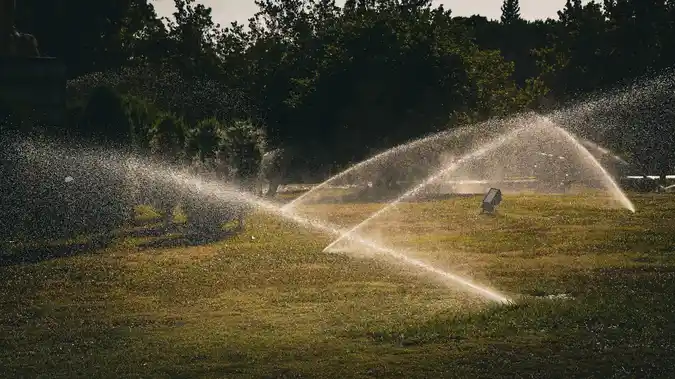
Loamy soil gives you the widest choice of sprinkler head types, because it absorbs water at a balanced rate. That means spray heads, rotor heads, and drip emitters can all make sense depending on the zone and the plant mix.
This is the soil that makes sprinkler planning feel easiest. Turf can take rotor heads well, smaller lawn areas can use spray heads without as much runoff risk, and beds can still use drip emitters for clean root-zone watering. Loam forgives more mistakes than clay or sand, which is why it is often the least fussy soil to irrigate.
But flexibility does not mean every head works equally well. Spray heads still make the most sense for small, even turf areas where quick coverage helps. Rotor heads suit larger turf zones because they deliver water more slowly and more evenly over distance. Drip emitters work well for beds, slope edges, and mixed plantings.
Loam’s practical hierarchy
- Spray heads for compact turf zones
- Rotor heads for larger lawn areas
- Drip emitters for beds, trees, and shrubs
The mistake people make with loam is assuming “middle ground” means any head will do. It does not. It just means you can choose based on plant needs instead of fighting the soil.
Spray heads vs rotor heads vs drip emitters
Spray heads win on quick coverage. Rotor heads win on slower delivery. Drip emitters win on targeted watering. That is the cleanest way to sort them out before you touch a layout chart or spacing plan.
Spray heads throw water in a fan pattern and usually suit smaller turf zones with fairly uniform soil. They are simple and fast, but that speed can be a problem in clay and sandy soil. Rotor heads rotate streams across a larger area and apply water more slowly, which helps when runoff is the main risk. Drip emitters skip the broad spray altogether and send water directly to the root zone.
The honest side-by-side
| Criteria | Spray Heads | Rotor Heads | Winner for this condition |
|---|---|---|---|
| Clay soil | Can run off if output is too fast | Slower application gives soil time to absorb | Rotor heads |
| Sandy soil | Water can move past roots quickly | Better control than spray, but still zone-dependent | Rotor heads |
| Loamy soil | Works well on small turf areas | Works well on larger turf areas | Depends on zone size |
| Bed watering | Broad spray often hits leaves and paths | Usually too broad for beds | Drip emitters |
| Runoff risk | Higher in clay and sloped areas | Lower because delivery is slower | Rotor heads |
| Root-zone precision | Lower precision | Moderate precision | Drip emitters |
| Small, even lawn zone | Simple and practical | Can be more than you need | Spray heads |
| Water-use control | Good when soil accepts fast intake | Better when intake is slower | Rotor heads |
| Mixed planting beds | Often wastes water outside roots | Better than spray, but still broad | Drip emitters |
Coverage and control are the real trade-off. Spray heads are not “bad” in every yard, and rotor heads are not always the answer. The right choice depends on whether the soil can absorb what the head throws down before the water escapes the root zone.
Drip emitters: when they beat both spray and rotor
Drip emitters are the right choice when root-zone delivery matters more than wide coverage. They are the strongest option for shrubs, trees, foundation beds, and mixed planting zones where a lawn-style head would waste water.
They are especially useful in clay and sandy soil because the delivery is slow and local. In clay, that helps prevent runoff. In sand, that helps keep water near the plant longer instead of sending it below the roots. In loam, drip still works well for beds even if other heads are fine for turf.
The downside is obvious: drip is not a lawn solution by itself. It is slower to lay out, more zone-specific, and less suited to open turf where a wide spray pattern is expected. It also needs careful emitter placement, or you can water one plant and miss another. Easy to install? Not usually.
Drip emitters are best for
- Shrubs
- Trees
- Mulched beds
- Mixed planting islands
Skip drip if
- You are watering a continuous lawn area
- You want one head to cover a broad turf zone
- You need the visual simplicity of pop-up lawn heads
On a zone-by-zone plan, drip is often the most efficient choice for everything except grass. That is why it shows up so often in good irrigation design.
Which head should you choose if the yard has mixed soil?
Choose different sprinkler head types by zone if the soil changes across the yard. A single-head strategy is usually the wrong answer when one side is clay, another side is sand, and the beds are loam.
This is where the common shortcut fails. People ask for one head type for the whole yard, but the better setup is often a blend: rotor heads for clay turf, spray heads for loamy turf, and drip emitters for beds or sandy planting islands. That lets each area match the soil it actually has.
Mixed soil means mixed behavior. A clay patch on the down-slope may need slower watering than the sandy strip near the driveway. If you force one pattern across both, one zone will usually waste water.
Use separate head types when
- The soil changes from zone to zone
- Turf and beds share the same irrigation loop
- Sloped areas shed water faster than flat ones
Stick with one type only when
- The soil is uniform
- The plant needs are nearly the same
- The zone shape is simple and small
This is also the point where the rest of the system matters. Pressure, spacing, and valve grouping all affect whether the head choice works the way it should. That planning belongs in the larger system design and planning guide, not on this page.
The verdict: which sprinkler head type should you pick?
Choose rotor heads if you are watering turf in clay soil or any zone where runoff is the main risk. Choose spray heads if the soil is loamy, the turf area is small, and you need quick, even coverage. Choose drip emitters if you are watering beds, shrubs, trees, or any zone where precision matters more than broad coverage.
Do not expect one head type to solve every soil problem in the yard. That shortcut breaks down fast in mixed soils, sloped ground, and plant beds with different water needs.
Here’s the shortest version:
- Clay: rotor heads first, drip emitters for beds
- Sandy: drip emitters first, rotor heads for turf
- Loamy: spray, rotor, or drip depending on the zone
That is the practical answer most generic guides skip. Soil type changes the watering speed you need, and watering speed changes the head that actually works.
For a deeper product comparison, see the drip irrigation guide and the rotor vs spray heads guide.
Which sprinkler head works best in clay soil?
Rotor heads usually work best in clay soil because they apply water more slowly than spray heads. That slower output gives dense soil time to absorb moisture instead of letting it run off the surface. Drip emitters can be even better for beds, shrubs, and trees.
Are spray heads bad for sandy soil?
Spray heads are usually a poor fit for sandy soil because the water can move past the roots too quickly. Short cycles may help, but drip emitters or slower rotor heads usually control moisture better in sandy zones. The problem is not coverage; it is loss below the root zone.
Can one yard use different head types in different zones?
Yes, and that is often the right setup. One yard can use rotor heads in clay turf, spray heads in loamy turf, and drip emitters in beds or sandy islands. Mixed soil and mixed planting usually call for mixed head types, not one universal choice.
Drafted with AI; not yet reviewed by a person.