Last updated: November 05, 2026
Quick Answer: the right irrigation plan usually starts with 4 factors: the plants, the soil, the slope, and the sun. In this guide to Irrigation system planning and watering strategy — The Complete Guide, the goal is to match water application to root depth, infiltration rate, sun exposure, and local watering rules, then choose hardware that can deliver that pattern without waste or runoff. If the layout is wrong, no timer setting will save it.
Key Takeaways
- Match water delivery to each zone’s demand, not the whole yard at once.
- Begin with plant type, then soil, then slope, then sun exposure.
- Drip usually fits beds, shrubs, trees, and vegetables because it waters roots and reduces overspray.
- Rotors usually fit medium and large turf areas.
A good irrigation system is not one schedule for the whole yard. It is a set of watering zones, each sized for a specific plant type and soil condition, with a strategy that puts water where roots can use it. In Irrigation system planning and watering strategy — The Complete Guide, that is the difference between a lawn that survives July and a landscape that looks green while quietly wasting water.
I write about irrigation design, landscape water use, and turf/plant water management because the hard part is rarely the nozzle or the valve; it is the planning.
What irrigation planning is really solving
The answer is water distribution that matches demand zone by zone. A lot of people start by asking which sprinkler head is “best,” but the real problem is simpler and harder: how much water does each area need, how fast can the soil absorb it, and how often should it receive it?
A planning mistake shows up in one of three ways: runoff down a driveway, dry strips between heads, or plants that get the same schedule even though one bed sits in full sun and another lives in shade. The fix starts with a site map. Mark sunny areas, shade, slopes, hardscape, compacted soil, clay pockets, and plant groups with similar water needs. That map decides the zones before any pipe gets buried.
The most useful frame is this: irrigation planning is not about watering “the yard.” It is about watering categories of plants. A lawn, a shrub bed, and a drip-only vegetable patch should almost never share the same timing or flow pattern. The lawn usually wants a broader, higher-output pattern. Shrubs usually do better with slower, deeper delivery. Drip lines belong where targeted root-zone watering matters more than surface coverage.
The other half of planning is local law and utility pressure. Some regions limit watering days, hours, or use under drought stages. A system that depends on frequent shallow watering may fail under those rules. A system built for deep, less frequent watering is usually safer, because it keeps plants alive with fewer cycles and less evaporation.
In short: how should you plan the zones in an irrigation system planning and watering strategy?
Start with plant type, then soil, then slope, then sun exposure. That order matters because it keeps the schedule tied to root behavior instead of convenience. A zone with clay soil on a slope needs slower application than a flat bed with sandy soil, even if both look similar on a plan.
A practical zoning plan usually breaks the property into these groups:
- Turf areas with similar sun exposure and sprinkler reach
- Shrub and perennial beds with similar root depth
- Drip-fed vegetables or container groups
- Separate slope zones, because runoff risk changes the run time
- Separate shade and full-sun zones, because evaporation differs
If the site has mixed soil types, do not force a single schedule across both. Clay holds water longer and takes it in more slowly. Sand absorbs quickly but drains fast. Mixing them in one zone creates one of two bad choices: overwatering the clay or underwatering the sand.
The safest rule is usually to group plants by water need and water intake rate rather than by geography alone. That means a sunny lawn strip near the street may deserve a different zone from the shaded side yard, even if they sit close together.
A slope often needs special treatment. On sloped ground, long continuous watering can move water downhill before it sinks in. Shorter cycles with soak time between them reduce runoff, and it is wise to consult a qualified irrigation professional for steep or complicated sites. That approach matters more than the exact brand of head.
A planning sheet should also note pressure and flow. If available pressure is low, large spray zones may underperform. If flow is limited, too many heads on one line can drop coverage and create dry patches. A design that ignores these numbers usually gets “fixed” later with overlong run times, which wastes water and still leaves weak spots.
Which irrigation method fits which part of the property?
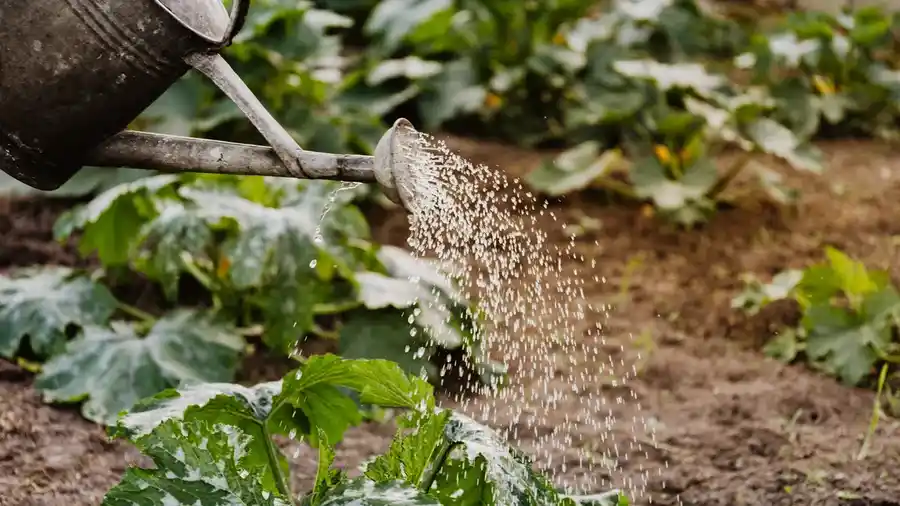
Drip irrigation wins for beds, shrubs, trees, and vegetables because it puts water at the root zone and cuts overspray. Rotors usually win for larger turf areas because they cover more ground with fewer heads. Fixed spray heads can work on small, flat lawn sections, but they are easier to misadjust and are more likely to throw water onto pavement if spacing is sloppy.
Here is the plain version: use drip where precision matters, use rotating heads where area coverage matters, and use fixed spray only where the geometry is simple and the beds are small.
Drip irrigation: best for targeted water use in irrigation system planning and watering strategy
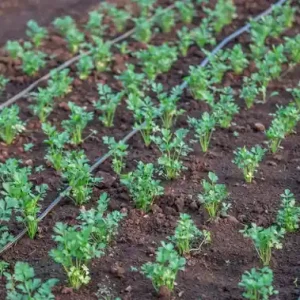
Drip is the right choice for shrub beds, mixed perennial borders, foundation plantings, and many vegetable rows. It delivers water slowly and directly, which improves infiltration and cuts evaporation loss. It also keeps foliage drier, which helps reduce some disease pressure on leaves.
The drawback is maintenance. Emitters can clog, tubing can get nicked, and a drip zone can fail quietly because a blocked line does not create the dramatic spray leak people notice right away. That means drip needs filtration, occasional flushing, and a layout that makes inspection easy.
Drip is generally not the best choice for large turf. It can be done, but turf usually needs a different surface pattern and a more even blanket of water than point-source emitters provide.
Rotors and rotary nozzles: best for bigger lawns
Rotors are often the better choice for medium to large turf areas because they throw water farther and usually tolerate wind a little better than simple sprays. Rotary nozzles, which apply water more slowly than standard spray nozzles, are especially useful where runoff is a concern or where soil takes water in slowly.
Their weakness is cycle length. Because they apply water more slowly, they may need longer run times to deliver the same depth of water. That is not a flaw if the soil can absorb it, but on steep slopes the longer run can still create runoff unless the controller is set for cycle-and-soak.
Fixed spray heads: best only in narrow, controlled spaces
Fixed spray heads fit small lawns, strips, and simple corners. They are straightforward and inexpensive to configure, which is why they are common. The trade-off is that they apply water quickly, so they are easier to overapply on clay or slope. They are also vulnerable to poor coverage if spacing is off by even a little.
Use them only where the shape is easy, the area is small, and the soil can take water quickly enough to avoid puddling.
The honest side-by-side
Rotors win on medium and large lawn coverage. Drip wins on precision. Fixed spray wins only on simple small areas. The real choice is not “which is best overall” but “which one matches the plant and soil in this zone.”
| Criteria | Drip irrigation | Rotors / rotary nozzles | Winner for this condition |
|---|---|---|---|
| Best plant type | Shrubs, beds, trees, vegetables | Lawn and larger turf sections | Drip for beds; rotors for turf |
| Water placement | Root-zone, low overspray | Broader surface coverage | Drip where precision matters |
| Runoff risk on slopes | Lower if flow is controlled | Higher unless cycle-and-soak is used | Drip on slopes |
| Maintenance burden | Emitter clogs and line flushing | Head alignment and wear | Rotors for easier visual inspection |
| Wind sensitivity | Low | Moderate | Drip in windy sites |
| Coverage efficiency | Excellent for discrete plants | Better for open areas | Depends on zone shape |
| Installation complexity | Moderate, especially with filters and pressure regulation | Moderate, especially for spacing and pressure balance | Rotors for simple turf runs |
| Best for soil that absorbs slowly | Yes, because water enters gradually | Only if run in shorter cycles | Drip on clay or compacted beds |
| Best for large contiguous lawn | Poor fit | Strong fit | Rotors |
| Worst-case failure | Hidden blockage or uneven output | Overspray and dry stripes | Depends on inspection habits |
That table is the core decision tool. A generic article would stop at “drip saves water” and “sprinklers cover lawns,” which is true but not enough. The consequence of a bad match is expensive: overwatering, plant stress, ugly coverage, and a schedule that has to be babysat all season.
A careful planner uses both systems where needed. Turf gets rotors or rotary nozzles. Beds get drip. Trying to make one method do every job usually costs more in water and repairs than splitting the site into proper zones.
How do you decide watering frequency and run time?
The right schedule is deep enough to wet the active root zone and spaced far enough apart to let the soil breathe. That means frequency depends on plant type, weather, and soil texture, while run time depends on precipitation rate and the amount of water the zone actually needs.
A common mistake is watering a little every day because it looks safe. For many established landscape plants, frequent shallow watering pushes roots upward and makes the planting more fragile during heat. Deep, less frequent watering usually works better once plants are established, because roots follow moisture downward.
That does not mean every plant should be stressed between waterings. Seedlings, newly installed sod, and fresh transplants need more frequent moisture until roots anchor. A newly planted tree is not the same as a three-year-old shrub. The schedule should change as the root system matures.
The practical method is simple:
- Estimate the zone’s water requirement based on plant type and climate.
- Check how fast the soil accepts water.
- Match run time to the system’s application rate.
- Split long runs into cycles if the water starts to pond or run off.
- Revisit the schedule after heat waves, rain, or seasonal change.
Cycle-and-soak is the key tactic on slopes and heavy soils. Instead of one long run, the system runs briefly, pauses, then runs again. This gives water time to infiltrate. It is one of the most useful settings on modern controllers, and it solves problems that a better head layout alone cannot fix.
The schedule also has to respect local watering windows. Early morning usually reduces evaporation loss and wind drift compared with midday irrigation. Evening watering can be acceptable in some systems, but it leaves foliage wet longer, which is not ideal for every plant disease profile.
What should a controller and sensor setup actually do?
A smart watering setup should change timing based on weather and shut the system off when nature already did the job. That means the controller is only one part of the plan. Rain sensors, soil moisture sensors, and seasonal adjustments matter just as much.
The best simple setup is often a reliable controller, a rain shutoff device, correctly grouped zones, and manual seasonal adjustment. A weather-based controller can improve convenience, but it is only useful if the site data and zone design are sane. A smart controller cannot fix a bad layout or a clogged line.
The rain sensor is the low-tech hero here. It helps prevent a scheduled cycle from running during or after measurable rain, and it is wise to consult a qualified irrigation professional for sensor placement and system compatibility. Soil moisture sensors can go a step further by measuring actual wetness in the root zone, which is more useful on tricky sites with shade, clay pockets, or variable drainage. The drawback is complexity. Sensors need placement, calibration, and occasional checks. If they are installed badly, they become decoration.
For many properties, the better budget choice is not the fanciest controller. It is a standard unit with clearly labeled zones, a seasonal adjustment feature, and a rain shutoff. The reason is practical: simple systems get used correctly. A complicated panel no one understands often stays at the factory schedule all summer.
One more detail matters: pressure regulation. If the irrigation hardware needs a certain operating pressure, the system should include the right regulator so no zone runs too hard or too weak. Wrong pressure can distort spray patterns, create misting, or leave heads underperforming.
Two authoritative references are worth keeping nearby when planning:
- The EPA WaterSense irrigation guidance on efficient watering and controller settings: https://www.epa.gov/watersense/irrigation
- The Irrigation Association’s standards and best-practice resources: https://www.irrigation.org/
When does the strategy need to change?
The schedule changes the moment the site changes. A static plan works for a few weeks; a living landscape does not. Seasonal temperature swings, plant maturity, new shade from tree growth, and changed soil compaction all affect water demand.
Spring usually calls for shorter runtimes than peak summer. Fall often needs less water as temperatures drop and evaporation slows. New plantings need a different schedule from established plantings. A newly seeded area needs frequent light moisture at first, while a mature shrub bed benefits from deeper, less frequent watering.
A good planner checks for these signs that the strategy is off:
- Water runs off before soaking in
- A zone stays damp hours after watering
- Turf develops dry rings or striped areas
- Bed plants droop even though the schedule is running
- Moss, algae, or fungus appear in chronically wet spots
- The system seems to need longer runtimes every month to “keep up”
If those signs appear, the answer is not always “water more.” Sometimes the zone is misgrouped, the nozzle size is wrong, the pressure is off, or the soil has compacted enough to change infiltration.
This is where many generic articles fail the reader. They treat watering as a fixed calendar task. Real irrigation planning is dynamic. The zone map stays mostly stable; the runtime does not.
The exception scenarios that change the verdict
The general rule is still the same: drip for beds and rotors for turf. But there are cases where that verdict flips.
1) A tiny, irregular lawn strip
If the turf area is narrow, broken up by paths, or boxed in by hardscape, fixed spray heads or short-throw rotary nozzles can be better than standard rotors. The reason is geometry. Rotors need room to throw water properly. On a strip under about the size of a small side yard, simplicity can beat broader coverage.
2) Very windy coastal or exposed sites
Drip becomes the safer choice for anything that does not need overhead coverage. Wind turns spray into drift, especially where heads throw fine droplets. If the site is exposed and the plants are not turf, overhead watering is often the wrong tool.
3) Heavy clay soil on a slope
Cycle-and-soak becomes mandatory, and drip may be the best answer even in places where overhead watering would otherwise be acceptable. Clay plus slope is the classic runoff problem. A faster application pattern simply moves water downhill.
4) Newly installed sod over a flat, open area
A temporary overhead watering plan may be better than drip during establishment. Fresh sod needs more uniform surface wetting until roots knit into the soil. Once the sod is established, the plan can shift to a longer-term turf schedule.
Those exceptions matter because they keep the advice honest. A one-size-fits-all answer would be easier to read and worse to use.
The verdict: which system and strategy to choose
Choose drip irrigation if the site is mostly beds, shrubs, trees, vegetables, slopes, or windy exposure, and choose rotors or rotary nozzles if the site is mostly open lawn with enough space for proper spacing and head-to-head coverage. Neither if the zones are mixed so badly that the same schedule would have to serve clay, sand, shade, and full sun in one line.
That is the clean recommendation.
Drip wins for precision, lower overspray, and better control at the root zone. Its trade-off is maintenance and the need for filtration, pressure management, and periodic flushing. Rotors win for larger turf areas and simpler broad coverage. Their trade-off is higher runoff risk on slopes and more dependence on correct spacing and runtime.
The watering strategy should follow the same logic: deep and infrequent for established plants, shorter cycle-and-soak runs for slope or clay, and more frequent moisture only for new plantings or seeds. A controller helps, but only if the zone map was built correctly first.
If the choice is between a fancy controller and a thoughtful layout, the layout wins every time. A good plan makes ordinary hardware perform. A bad plan makes expensive hardware look broken.
Drafted with AI; not yet reviewed by a person.