Last updated: November 12, 2026
Quick Answer: the right irrigation system monitoring and sensors setup usually starts with 2 core data streams—soil moisture and flow—and the best setup for many sites is 2 to 3 sensor types, not a full stack. Your irrigation system is wasting water, missing dry spots, or firing at the wrong time. Irrigation system monitoring and sensors fix that by showing when soil is dry, when flow is abnormal, and when parts of the system stop working. The guide below settles which sensors matter, what each one actually tells you, and what to ignore.
You already know the headline: a sensor without a monitoring plan is just another wire in the dirt. I write about irrigation controls and field hardware for a living, and that matters because the difference between “smart” and useful is usually one setting, one threshold, or one bad placement. Irrigation system monitoring and sensors work best when the crop, the soil, and the valve layout lead the decision.
Key takeaways
- Soil moisture sensors tell you when roots need water; flow sensors tell you if the system is losing water.
- Rain, pressure, and tank-level sensors each solve a different problem, so one device rarely covers the whole site.
- A good setup starts with the crop, the soil, and the valve layout—not the app.
- Bad placement creates bad data faster than bad hardware does.
- Most failures come from wiring, calibration, clogged probes, or treating alerts as if they were the same as irrigation rules; if you are unsure how to interpret them, consult a qualified irrigation professional and follow guidance from the Irrigation Association and EPA WaterSense.
What irrigation monitoring actually does
Picture this: you’re looking at a field, orchard, or lawn that looks fine from the truck, but one zone is soggy, another is dry, and the controller has no clue. Monitoring closes that gap by turning the system into something you can measure, not guess.
It does that with 3 kinds of data: water applied, water moving, and conditions in the root zone. That sounds simple. It isn’t. A pressure drop can mean a broken head, a clogged filter, or a valve issue. A dry sensor can mean the plant needs water—or that the probe sat in a pocket of coarse sand.
The truth is, monitoring does not replace the controller. It gives the controller better inputs and gives you a record when something drifts out of range.
- Application data: how long zones ran, when they ran, and how much water they should have delivered.
- System data: flow rate, pressure, valve status, leaks, and pump behavior.
- Root-zone data: soil moisture, temperature, salinity in some systems, and sometimes weather.
That mix is why a single “smart” device rarely solves the whole problem. A controller can schedule irrigation. A sensor network can tell you whether that schedule worked.
Why this matters more than the controller brand
Picture this: you’re comparing two controller labels, but the real problem is buried under the soil line. A good controller can only obey the data it gets; a poor sensor setup can make an expensive controller look bad.
A basic timer runs on time. A monitored system runs on condition. That difference matters most where water is expensive, labor is tight, or crop stress shows up fast. In places with mixed soil types, even a decent schedule can fail because sandy areas drain quickly while clay holds water longer.
A monitoring plan should answer 4 questions:
- Did the zone run?
- Did water move the way it should?
- Is the root zone too dry or too wet?
- Did weather or a leak change the plan?
If it cannot answer those, it is decoration.
Which sensors belong in a real irrigation system?
Because the controller only does what the data tells it, the next step is choosing the sensors that match the site’s real failure points. Picture this: you’re planning a new setup and the catalog is full of sensor types that all promise “smart” irrigation. The right answer is not to buy every sensor; it is to choose the few that solve the site’s actual failure points.
The core set is usually soil moisture, flow, and rain or weather. Pressure sensors matter when pipes, filters, long laterals, or pump stations can fail in ways flow alone won’t catch. Level sensors belong on tanks, reservoirs, and fertigation storage.
Soil moisture sensors
These are the most useful sensors for field decisions because they watch the root zone directly. Capacitive probes, tensiometers, and volumetric water content sensors all do this in different ways, and each comes with trade-offs.
- Capacitive sensors are common and useful in many turf and landscape systems, but they can drift if salinity changes or if installation is sloppy.
- Tensiometers are strong in many irrigated soils, especially where you need to know how hard plants must pull water from the soil, but they need maintenance and can fail if air enters the tube.
- Volumetric sensors are often used in modern monitoring systems because they give a direct reading of water content, yet they still need calibration for the soil type.
These sensors are only as good as their placement. Put them in a wet corner, and the system will under-irrigate the rest of the block. Put them too shallow, and the sun and surface evaporation will trick you.
Flow sensors
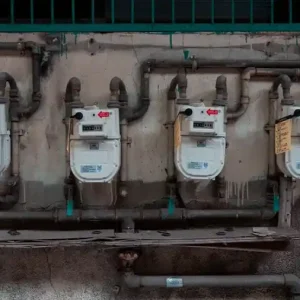
Flow sensors catch leaks, stuck valves, clogged heads, and broken mains faster than visual checks do. They belong on almost any system larger than a tiny residential zone because they show what the controller asked for versus what actually moved.
A flow meter does not tell you where the leak is. It tells you that the system is out of pattern. That is enough to cut water waste fast.
Common use cases:
- broken lateral lines
- missing sprinkler heads
- valve failure
- pump performance drift
- abnormal nighttime flow
That last one matters. Night flow that should be near zero often points to leaks or stuck valves.
Pressure sensors
Pressure sensors help when delivery depends on a stable pressure range. They are especially useful on long runs, hillside systems, pump-fed systems, and filtration setups where a clogged screen can quietly ruin coverage.
If pressure falls, distribution changes. That can show up as poor throw distance, uneven drip delivery, or emitter problems far from the pump. If pressure rises above normal, you may have a regulator fault or a valve issue.
Pressure sensors are often a priority when the system has long pipe runs, multiple elevation changes, or equipment that fails quietly.
Rain and weather sensors
Rain shutoff devices and weather-based inputs stop unnecessary irrigation after rainfall or during cooler, damp conditions. They are simple tools, but they prevent obvious waste.
Weather inputs are best when they are tied to a real scheduling rule, not just a pause button. If the controller cannot use the data to change runtime or skip a cycle, the sensor only adds noise.
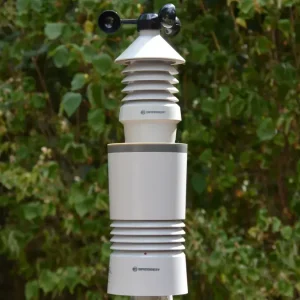
A basic rain sensor is not the same as a weather station. A rain sensor says it rained. A weather station can add evapotranspiration, temperature, wind, and solar radiation data to support better scheduling.
Tank level and reservoir sensors
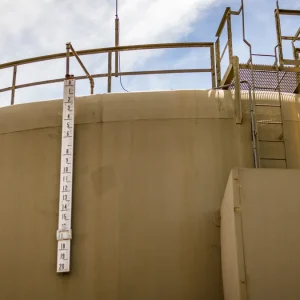
These belong in systems that pull from a tank, pond, or storage vessel. They warn you before a pump runs dry and help time refill decisions.
Level sensors matter even more where fertigation is involved. A dropped tank level can mean a supply issue, a pump issue, or a calibration problem. Without level data, someone notices only when the system fails.
The short version: soil moisture tells you when to irrigate, flow tells you whether water moved, and pressure tells you whether the system delivered it correctly.
How do you choose the right sensor type?
Now that the major sensor types are clear, the real choice is matching them to the failure that will cost you the most. Picture this: you’re standing in front of a site with a budget, a controller, and three different soil types. The right sensor is the one that matches the failure you most need to catch, not the one with the longest spec sheet.
Start with the site problem, then pick the sensor. That order matters.
Match the sensor to the job
- If the issue is overwatering or underwatering, start with soil moisture.
- If the issue is leaks or broken lines, start with flow.
- If the issue is weak coverage on long pipe runs, add pressure.
- If the issue is storm runoff or skipped cycles after rain, add rain sensing or weather input.
- If the issue is pump starvation or tank collapse, add level sensing.
The biggest mistake is buying a weather sensor when the real failure is a hidden leak. Another mistake is buying a soil probe when the field problem is actually pressure loss in a long line.
Match the sensor to the soil and crop
Clay, loam, and sand behave differently. Sandy soil drains fast and can make a shallow sensor look too dry too soon. Clay can hold moisture near the probe while roots elsewhere are stressed. In vineyards, orchards, turf, and row crops, the root depth and watering pattern are not the same either.
That is why the same sensor can be right in one block and wrong in another.
Match the sensor to maintenance reality
Some sensors need cleaning, calibration, or periodic replacement. Others need careful burial depth and wiring protection. If the crew will not maintain it, choose the sensor that can survive neglect better.
Here’s the catch: the lowest-cost sensor can be expensive if it creates false alarms every week.
The honest side-by-side: what each sensor catches
Picture this: you’re deciding what to monitor first because you cannot instrument everything at once. The right move is to rank the failure modes that would cost you the most water, labor, or crop stress.
The table below is the practical view: what each sensor is good at, what it misses, and when it belongs in the plan.
| Criteria | Soil moisture sensor | Flow sensor | Pressure sensor | Rain/weather sensor | Winner for condition |
|---|---|---|---|---|---|
| Main job | Reads root-zone water status | Detects water movement changes | Tracks delivery force | Tracks weather input | Soil moisture for irrigation need |
| Best use | Timing irrigation by plant need | Finding leaks and broken lines | Spotting clogs and pump issues | Skipping runs after rain | Flow for hidden failures |
| Weak spot | Placement and calibration | No location detail on its own | Can miss root-zone problems | May not reflect actual field wetness | Depends on the problem |
| Maintenance | Probe care and checks | Meter cleaning and verification | Sensor calibration and fitting checks | Mounting and data checks | Flow for systems with leaks |
| Works best with | Weather data and controller logic | Pressure and zone data | Flow and valve data | Soil or schedule data | Paired systems |
| Typical failure it misses | Buried leaks far from the probe | Dry soil with normal flow | Wrong irrigation timing | Soil-specific drying rates | Soil moisture for crop stress |
| Install sensitivity | High | Medium | Medium | Low to medium | Rain sensor for quick add-on |
| Data value over time | High when calibrated | High on larger systems | High on pressurized lines | Moderate unless tied to ET | Soil moisture for long-term decisions |
The table is simple on purpose. Monitoring only works when the sensor matches the decision you need to make.
How do you install sensors without ruining the data?
With the right sensor selected, installation becomes the next critical step because one bad trench or one sloppy probe depth can poison the readings for months. Good installation is not a side task; it is part of the sensor itself.
Placement matters more than brand in a lot of systems. A decent sensor in the right zone beats a premium sensor in the wrong spot.
Soil moisture placement rules
Put the probe where roots actually feed, not where the crew can reach it easiest. In many systems that means placing sensors in representative zones, away from heads, slope runoff, compacted edges, and odd wet spots.
General rules:
- place in a typical part of the zone, not the best-looking corner
- avoid spots near leaks, low points, or emitter puddling
- use the same depth across comparable zones
- install multiple sensors if the zone has different soil textures
Depth matters too. Too shallow and the probe sees surface swings. Too deep and it may miss the active root zone.
Flow meter placement rules
Flow meters need straight, stable pipe sections and correct orientation. Turbulence, air, and bad fitting placement can distort readings. That means placement near pumps, elbows, or valves should follow the manufacturer’s installation rules, not guesswork.
If the system has filters, think about where debris might affect readings. If the meter sits in a line that traps air, the data can lie.
Pressure sensor placement rules
Pressure sensors should sit where the reading reflects the zone, not just the nearest pipe stub. On long systems, that may mean more than one sensor. On slope-heavy sites, the high point and low point can tell different stories.
Weather sensor placement rules
Rain and weather sensors need exposure to real conditions. Put them where buildings, trees, or fences do not block rainfall or airflow. A weather station next to a wall reads the wall’s microclimate, not the field’s.
Wiring, power, and comms
Bad wiring is a classic failure. Long cable runs, poor sealing, or weak power protection can knock a sensor offline even when the hardware is fine. If the system uses wireless links, confirm signal strength where the device will live—not just at the office.
A monitoring setup also needs a plan for outages. If the network goes down, can the controller still run safe schedules? If not, you do not have resilience.
What should the monitoring dashboard tell you?
Once the hardware is installed, the dashboard has to turn raw readings into actions. Picture this: you’re staring at a phone app, and it says “normal,” which is useless if the roots are dry or the main line is leaking. A useful dashboard gives you decisions, not just data.
The screen should answer 5 practical questions:
- Which zone ran?
- How much water moved?
- Did pressure stay in range?
- Is the soil trending dry or wet?
- Which alert needs action first?
That is the standard. Everything else is secondary.
Good alerts
Good alerts are specific. “Zone 4 high flow during night cycle” is better than “system alert.” “Soil moisture dropping below target in Block B” is useful. “Connection lost” is useful only if it is tied to a device name and a time.
Bad alerts
Bad alerts are vague, repetitive, or untethered to action. Too many alerts train people to ignore the system. That is how real failures get missed.
A useful dashboard should also keep a history. Trends matter more than single spikes. One dry reading can be noise; a week-long drop is a pattern.
What to log
At minimum, keep:
- zone runtime
- flow by zone or station
- pressure if available
- rainfall or weather events
- sensor alarms
- manual overrides
That record is what lets you diagnose the next problem faster than the first one.
What are the common mistakes with irrigation sensors?
After installation and dashboard setup, the next risk is operational: the site can still make the data lie if the system is managed badly. Picture this: you’re paying for data, but the site is making the data lie. Most bad monitoring systems fail for boring reasons, and those reasons are fixable.
The biggest mistake is treating sensors like install-and-forget hardware.
The common failures
- Wrong placement: a probe in an unusually wet or dry spot gives bad guidance.
- No calibration: generic readings can drift away from real site conditions.
- Too few sensors: one sensor on a mixed site tells a partial story.
- No maintenance: clogged, corroded, or damaged hardware sends false signals.
- No action plan: alerts pile up, but nobody changes irrigation behavior.
- Bad pairing: a weather sensor is installed when the actual issue is a leaking valve.
The hidden problem: false confidence
A display full of numbers can make a manager feel informed. That is dangerous if nobody knows what each reading should trigger. Monitoring works only when thresholds, responses, and responsibilities are set in advance.
If the sensor says “dry” but the irrigation plan does not change, the site has just bought a very expensive alarm.
When does monitoring pay off most?
Because no system has unlimited budget, the next question is where monitoring changes outcomes fastest. Picture this: you’re deciding where sensor money will actually change the result. The strongest case is not every lawn or every field; it is the site where waste, stress, or labor errors are already costing real money.
Monitoring pays off fastest in 4 situations:
- large systems with many zones
- sites with expensive water or power
- crop settings where stress shows quickly
- systems with chronic leaks, pressure swings, or pump problems
It also pays off when labor is thin. A good flow alarm can catch a broken line before a crew member walks the whole property.
Where it may not be worth much
On tiny, simple systems with uniform soil, low water cost, and little risk from missed runs, a full sensor stack can be overkill. A basic rain sensor or one moisture sensor may be enough.
That is the honest line: not every site needs a full monitoring network.
The verdict: which setup to choose and why
When the budget is limited, the best setup is the one that answers the site’s most expensive failure first. Picture this: you’re ready to spend money, but only one setup will actually solve the problem that keeps showing up. The right choice depends on the failure you want to catch first.
Choose soil moisture plus flow if the real problem is deciding when to irrigate and proving whether the water reached the zone. Choose flow plus pressure if the system loses water through leaks, clogs, or pump trouble and the root-zone side is already under control. Neither if the site has no clear irrigation problem, no one to review alerts, and no plan to act on the data.
That is the decision.
The verdict in plain terms
- Soil moisture wins for scheduling decisions.
- Flow wins for leak detection and system health.
- Pressure wins when delivery problems hide inside the pipe network.
- Weather sensors win when rain or climate should stop a cycle.
- Level sensors win when storage or pump starvation is the risk.
If the budget is tight, start with the sensor that catches the most expensive failure on the site.
When should you reconsider the whole setup?
If the site still behaves badly after sensors are in place, the problem may be design, not instrumentation. Picture this: you’re about to add sensors to a system that might need a different fix altogether. Sometimes the answer is not better monitoring; it is rethinking the irrigation design.
Reconsider the setup if the system has these problems:
- the zone layout is badly matched to soil type
- pressure is wrong everywhere, not just in one area
- the controller schedule is obviously outdated
- valves, filters, or emitters are failing repeatedly
- nobody will review alerts within a day or two
A sensor network cannot rescue a broken hydraulic design. It can expose it quickly, which is useful, but it cannot fix poor pipe sizing or bad zoning.
Sources worth checking
For technical background and installation standards, the following bodies publish material that is worth reading directly:
- FAO irrigation and water management guidance
- ASABE standards and engineering references
- Irrigation Association training and best-practice material
- EPA WaterSense guidance for efficient irrigation practices
Those sources are not decorative. They are where the basics of irrigation efficiency, equipment use, and system behavior are usually explained cleanly.
FAQ
What sensor should I buy first for irrigation monitoring?
Start with the sensor that catches your most likely failure. For many systems that is a flow sensor, because it spots leaks, broken lines, and stuck valves quickly. If the main problem is deciding when to irrigate, start with soil moisture instead.
Do I need both soil moisture and flow sensors?
Yes, on many systems that combination gives the best picture. Soil moisture tells you whether the root zone is drying out, while flow tells you whether the system delivered the water it was supposed to deliver. One without the other leaves a blind spot.
How many sensors does one irrigation zone need?
One sensor can work on a very uniform zone, but mixed soil or slope usually needs more than one. The goal is to place sensors where they represent the zone, not where they are easiest to install. If the zone has sandy and clay areas, one probe is usually not enough.
Can a weather sensor replace soil moisture sensors?
No. A weather sensor shows rain and atmospheric conditions, but it does not show what is happening in the root zone. Soil moisture sensors tell you whether the plant actually has access to water, which is the part that matters for irrigation timing.
What is the biggest mistake people make with irrigation sensors?
The biggest mistake is installing sensors without a response plan. A sensor that sends alerts but never changes runtime, valve checks, or maintenance work is just a noisy box. Placement mistakes and lack of calibration come right behind that.
Drafted with AI; not yet reviewed by a person.