Last updated: November 06, 2026
Quick Answer: Water deeply once the soil starts drying out, then stop before runoff begins; for many lawns, that means checking moisture every 2 to 7 days, not watering on a fixed calendar. How to water a lawn efficiently without overwatering starts with the lawn, not the calendar. Water deeply, only when the soil is drying out, and stop before water begins to run off. That usually means checking soil moisture, watching the grass blades, and adjusting for weather instead of running the sprinkler system on a fixed guess.
If the grass is dull blue-green, footprints stay visible, or the soil is dry a few inches down, the lawn needs water. If the ground feels soft for hours after watering, there is a good chance it is getting too much. The goal is to wet the root zone, then let it dry enough to pull air back into the soil.
The lawn watering schedule that actually works
The right lawn watering schedule is a decision, not a promise made every Tuesday at 6 a.m. A useful schedule for how to water a lawn efficiently without overwatering starts with what the grass, soil, and weather are doing today.
This matters because a clay lawn, a sandy lawn, and a shaded lawn all dry at different rates. A sprinkler timer can keep the habit consistent, but it cannot tell whether the top few inches are still wet. That is where most overwatering starts.
Use this simple rule: water only when the lawn gives two signs at once. The first is the grass itself, such as a dull color, folded blades, or lingering footprints. The second is soil moisture, checked with a screwdriver, probe, or your finger a few inches below the surface. If the top layer is dry but the soil below is still cool and damp, wait.
A useful schedule also changes with season. In cool spring weather, many lawns need less frequent watering than they do during hot, windy periods. In fall, growth slows and evaporation drops. In winter dormancy, many lawns need little or no supplemental water except in dry climates. Exact timing depends on turf type, sun exposure, and rainfall, so there is no one universal calendar.
For a broader planning framework, the irrigation system planning hub should sit above this page, because the watering schedule is only one part of the larger system.
How to water a lawn efficiently, step by step
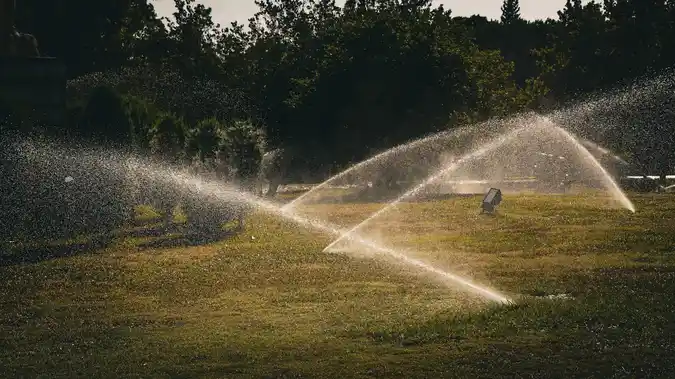
Efficient watering starts with checking the soil and ends with watching how the lawn reacts over the next day. The point is to apply enough water to reach the roots without pushing water past them or sending it across sidewalks.
- Check soil moisture before you turn anything on. Push a screwdriver, soil probe, or a 6-inch trowel into the lawn in two or three spots. If it slides in easily and the soil feels cool and damp 2 to 4 inches down, hold off. If it resists and the soil is dry below the surface crust, water that area.
- Water early in the morning. Start before the day heats up, often between 4 a.m. and 9 a.m. in many yards. Morning watering reduces evaporation and gives blades time to dry, which helps limit disease pressure. The lawn should look evenly wet, not puddled.
- Run the sprinkler long enough to soak the root zone, not just the surface. Use the sprinkler timer to set one deep watering session instead of several short sprinkles. When the run is right, the soil a few inches down is moist after watering, and the lawn does not need another cycle the same day.
- Pause before runoff starts. If water begins flowing into the street, pooling on driveways, or sliding downhill, stop the cycle. That means the application rate is too fast for the soil. Split the watering into shorter cycles with soak time between them, or move the sprinkler to a slower pattern if the model allows it.
- Measure coverage across the lawn. Put a few shallow cans or straight-sided containers around the spray pattern and see whether they fill evenly. Dry patches mean the sprinkler placement is off; wet strips and dry corners mean the layout needs adjustment. Even coverage matters more than a longer run time.
- Recheck the next day. The grass should perk up without staying soggy. If the soil is still wet well below the surface, shorten the next watering. If it dries out too quickly, the lawn may need a little more water or a different schedule.
This method fits most home lawns with a basic sprinkler system and a timer. It is wrong for yards with severe slope, compacted clay that sheds water fast, or newly seeded areas that need a different moisture pattern. Those situations need tighter attention because the same cycle that works on level turf can waste water on a slope or drown fresh seed.
How do I know if my lawn needs water?
The lawn needs water when the grass and the soil both show stress. A single dry-looking patch is not enough; a hot, exposed edge can dry out faster than the rest of the yard.
Use three checks. First, look at color. Healthy turf often has a steady green tone, while thirsty grass can turn gray-green or dull. Second, step across the lawn and watch for footprints. If blades stay flattened instead of springing back, the turf is signaling drought stress. Third, check the soil 2 to 4 inches down. Surface dryness alone can be misleading, especially after a light shower or a short sprinkler cycle.
Soil type changes what “needs water” looks like. Sandy soil drains fast and may need closer monitoring. Clay soil holds water longer, but it can also turn hard and resist infiltration if it dries too far. A loam lawn usually gives the clearest signal because it balances moisture and drainage better than the extremes.
A rain sensor helps here if the sprinkler system has one. When a rain sensor is working, it keeps the system from watering after useful rainfall. That is not the same as a smart controller; this page is about watering efficiently, not system design. A simple sensor still earns its place because it saves a cycle after rain without asking the reader to babysit the timer.
One honest limit: visual checks are less reliable on mixed lawns with sun and shade. A shady strip under a tree may still be moist while the center strip is already dry. Check both before making a whole-yard decision.
What watering depth should I aim for?
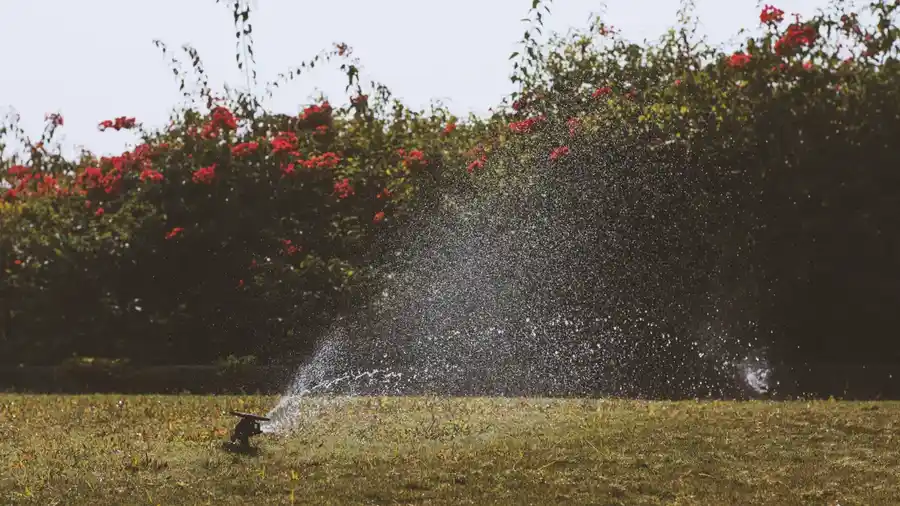
The target is moist soil several inches down, not a shiny surface that dries in an hour. Deep watering trains roots to follow the moisture downward, which helps the lawn handle heat and short dry spells better than frequent shallow watering.
A practical way to think about depth is this: water long enough that the upper root zone is wet, then stop. For many home lawns, that means the top few inches are damp after watering, but the surface is not left with standing water. If you dig a small sample after the cycle, the soil should be uniformly moist through the zone roots use most.
Shallow watering costs water twice. First, much of it evaporates before it reaches the roots. Second, the roots stay near the surface, where heat and drought stress hit hardest. That is why a short daily sprinkle often performs worse than a slower, deeper cycle.
There is a trade-off. Deep watering takes longer and can reveal weak spots in sprinkler coverage. If one area dries first, that section may need its own adjustment. If the slope sends water away before it soaks in, the answer is not more water at once; it is more time between cycles.
A mulch layer around trees, beds, or lawn edges can reduce evaporation near the perimeter, but mulch does not replace watering the turf itself. It helps the soil hold moisture where grass borders beds or roots compete for water. Keep it away from direct contact with grass crowns.
How often should I change lawn watering by season?
The frequency should change with temperature, rainfall, and growth rate, not by a fixed month on the calendar. In spring, lawns often need less water because cooler weather slows drying. In summer, wind and heat can dry the surface quickly, so the same lawn may need more frequent checks. In fall, watering usually drops as temperatures ease and growth slows.
Seasonal change also depends on whether the lawn is actively growing. A cool-season grass in a mild spring may need one pattern, then a warmer schedule in the first hot spell. A warm-season grass can respond differently again. That is why a lawn watering schedule built around soil moisture is more reliable than one built around date ranges alone.
The practical adjustment is simple. After a rain, wait and inspect. If the soil stays damp for several days, skip the next cycle. If the lawn dries out fast in a hot stretch, keep the same deep-watering approach but shorten the gap between checks. The timer can still help, but it should be reset as the weather changes.
Winter needs a different judgment. Dormant turf does not need the same regular watering as an active summer lawn, yet dry winter winds can still strip moisture from exposed sites. The right move is to water only if the soil is dry and the grass is showing stress, not because the schedule says so.
One common mistake is watering on a fixed “twice a week” plan all year. That often wastes water in cool weather and fails during hot spells. The better habit is to set a reminder to inspect, not to water automatically.
How do I avoid runoff?
Stop the cycle before water moves off the lawn, then give the soil time to absorb what you have already applied. Runoff is usually a timing problem, a slope problem, or a soil-infiltration problem.
The first fix is cycle-and-soak watering. Run the sprinkler for a shorter period, pause for 20 to 30 minutes, then run it again. That lets water sink into dense or compacted soil instead of racing across the surface. This method is especially useful on slopes, edges near sidewalks, and clay-heavy patches.
The second fix is rate control. If the sprinkler throws water faster than the ground can take it in, no amount of extra runtime helps. The lawn will simply shed more water. A simple test with several straight-sided cans placed around the spray pattern shows whether the area is getting water evenly or flooding one spot.
The third fix is landscape awareness. Aim spray only at turf, not driveways or streets. Trim back anything that blocks the spray path. If one zone runs off before it wets properly, the soil there may be compacted and need aeration or a different watering pattern later. That is a soil problem, not a reason to pour on more water.
Runoff wastes water and leaves dry roots behind. The lawn can look wet at the surface while the root zone stays dry underneath, which is not ideal. A smaller amount delivered slowly is usually better than one long blast.
What mistakes waste the most water?
The biggest water waste comes from watering too often, watering at the wrong time, and ignoring where the sprinkler actually lands. These mistakes are easy to make and expensive in both water use and lawn health.
Watering every day is the first trap. It keeps the top inch wet, but it often leaves roots shallow and encourages weak growth. The better approach is deeper, less frequent watering with checks in between.
Watering at noon is the second trap. Heat and wind increase evaporation, so more water never reaches the root zone. Morning is the safer window for most lawns because the surface dries in a reasonable time afterward.
Ignoring the edges is the third trap. Sprinkler patterns often miss narrow strips along walks, fences, and curbs. Those strips dry out first, which tempts people to add more time for the whole lawn. That overwaters the center just to rescue the edges. A better fix is to adjust the coverage or hand-water the dry strip instead of increasing the whole cycle.
A fourth mistake is assuming one setting fits all seasons. A timer set for July may be too much in April or October. A rain sensor helps, but it does not replace checking soil moisture after a storm or during a cool week.
The honest drawback of efficient watering is that it asks for more observation up front. A fixed schedule is easier. A better schedule is less wasteful, but it demands a 2-minute check of the soil and grass before each decision.
Key Takeaways
- Water the lawn based on soil moisture and grass stress, not by habit alone.
- Deep watering beats shallow daily sprinkling because it reaches the root zone.
- Morning watering reduces waste and gives the lawn time to dry.
- Pause a cycle if water starts to run off, and restart later instead of pushing through.
- A rain sensor and a timer help, but neither can replace a quick soil check.
- Seasonal adjustments matter; the same lawn does not need the same schedule in spring, summer, and fall.
How often should I water grass?
Water grass when the soil and the blades show that the lawn is drying out. The frequency changes with weather, soil type, shade, and season, so a fixed weekly rule is unreliable. A lawn that stays cool and moist after rain needs less water than one on a hot, windy slope. For related guidance, see the lawn care page and the sprinkler system tuning page.
What time of day is best to water?
Early morning is usually the best time to water for many lawns, though local climate and humidity can change the ideal window. The cooler air lowers evaporation, and the grass has time to dry after the cycle. Midday loses more water to heat, and evening watering can leave foliage wet longer than needed. For system setup, compare this with the smart sprinkler controller page.
How do I avoid runoff?
Use shorter cycles with soak time between them instead of one long blast. Water slowly enough that the soil can absorb it, especially on slopes or clay-heavy ground. If water moves into the street or pools on hard surfaces, stop and split the session. If runoff keeps happening, the lawn aeration page covers one way to improve infiltration.
How long should sprinklers run?
Run sprinklers long enough to wet the root zone, not just the surface. The exact time depends on sprinkler output, soil type, and slope, so there is no safe universal number. A better check is whether the soil is moist several inches down and whether runoff stays absent during the cycle. For more on matching output to the yard, see the sprinkler head adjustment page.
Drafted with AI; not yet reviewed by a person.