Last updated: November 13, 2026
Quick answer: most irrigation systems need 8 to 12 core parts, plus the right protection accessories, to work reliably. Irrigation system components and protection accessories — The Complete Guide is about matching the source, the delivery parts, and the safeguards so the system runs cleanly instead of failing at the weakest point. The sections below sort the parts, the protection gear, and the choices that actually matter.
Key takeaways
- A good irrigation system is a chain, not a single part; the pump, filter, valve, pipe, emitter, and protection accessories all have to match the same flow and pressure range.
- The biggest mistake is buying the visible parts first and treating backflow, pressure control, and freeze protection as add-ons; when in doubt, consult a licensed irrigation professional and follow local code.
- Sprinkler systems and drip systems use many of the same support parts, but they need different filters, regulators, and winter protection.
- The best setup for a small yard is not the same as the best setup for a long, sloped field or a frost-prone site, so the site should drive the layout.
I write on irrigation water source and capacity planning, so this is the kind of system layout that decides whether a design runs cleanly or becomes a constant repair job. In other words, Irrigation system components and protection accessories are not extras; they are what keeps the system usable over time.
What are the main parts of an irrigation system?
The main parts are the water source, pump or supply line, filter, backflow preventer, pressure control, valves, pipe, fittings, sprinkler heads or drip emitters, and controller. If one of those is undersized or missing, the whole system pays for it in poor coverage, leaks, or clogged outlets.
Picture this: you’re planning a yard or field and you want to know which parts are non-negotiable before you buy anything. The answer is simple — start with the source, then add the components that make pressure, flow, and water quality usable. That order saves money. It also saves rework.
A generic shopping list is not enough here. Pipe size, zone count, source pressure, and filtration level decide what belongs in the build, not a brand name on the box.
- Water source: municipal line, well, pond, tank, canal, or recycled supply.
- Pump or supply connection: moves water at the needed flow and pressure.
- Backflow preventer: protects the source from contamination.
- Filter: removes sand, silt, algae, and grit.
- Pressure regulator: keeps spray heads and drip lines inside their working range.
- Control valves: turn zones on and off.
- Mainline and lateral pipe: carry water through the site.
- Fittings, tees, couplers, elbows: connect the run.
- Emitters or sprinkler heads: deliver water to the soil or canopy.
- Controller, wire, and sensors: automate timing and shutdown.
The wrong move is to think of “components” as just pipes and heads. The hidden parts often matter more. A 24-volt solenoid valve, a 150-mesh filter, or a 2 psi drip regulator can be the difference between a system that holds up and one that keeps failing. For a standard reference point, the Irrigation Association provides design and terminology guidance that helps separate the visible parts from the required ones.
Why protection accessories matter more than most people think
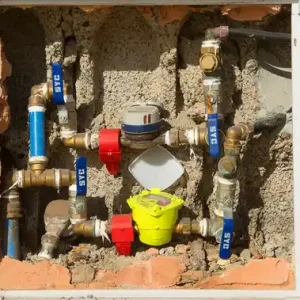
Protection accessories are the parts that stop a small problem from turning into a system-wide failure. They include backflow devices, air release valves, pressure relief valves, surge protection, freeze protection, check valves, filter screens, valve boxes, and insulation or drain hardware.
Picture this: you’ve installed good pipe and decent heads, then a pressure spike blows a fitting or a hard freeze cracks a riser. The system looked fine on day one. Then the weather, the water, or the power supply proved it wasn’t protected. That’s the real job of these accessories.
A lot of beginner layouts fail because they treat protection as optional; when that happens, the safest next step is to consult a licensed irrigation professional and verify the local requirements. In a municipal connection, backflow prevention is a safety issue. In a well system, pressure protection keeps fittings alive. In cold climates, drain and winterization parts are what keep plastic from splitting at the first freeze.
Here’s the catch: not every protection accessory belongs on every system, but every system needs some form of protection. The exact mix depends on water source, climate, elevation change, and whether the system is drip or spray.
- Backflow preventer: mandatory where local code or the source connection requires it.
- Pressure regulator: protects drip tubing and low-pressure emitters.
- Check valve: holds water in a line and reduces low-point drainback.
- Air/vacuum relief valve: helps prevent suction damage and line collapse in certain layouts.
- Filter: protects nozzles and emitters from sediment.
- Surge protection: guards controllers and valves from electrical spikes.
- Freeze protection: drain valves, blow-out ports, insulation, or automatic drains.
- Valve box and covers: keep service points clean and accessible.
The better part of this section is simple: most of these parts are cheap compared with the cost of digging up a line twice.
Which irrigation components are required for sprinkler systems?
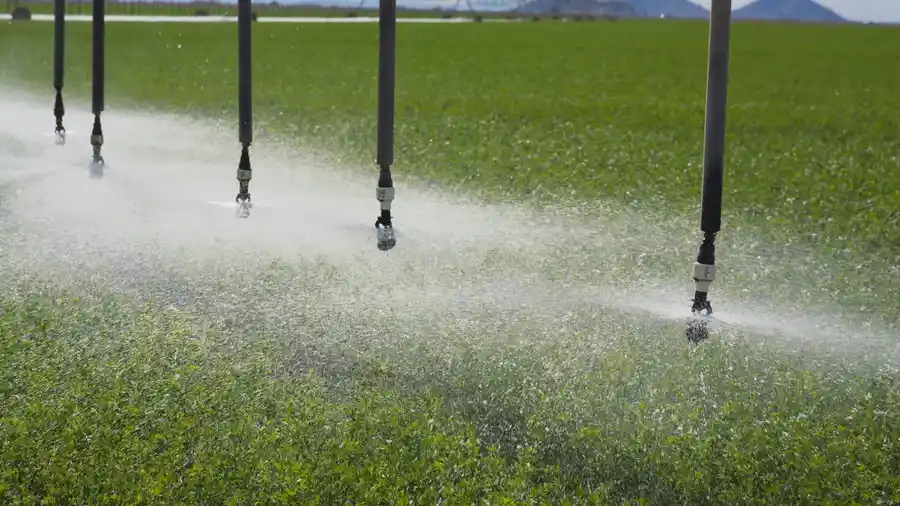
Sprinkler systems need a source, pump or supply pressure, backflow preventer, mainline pipe, zone valves, lateral pipe, heads, and a controller. If the site has sandy water or a long run, it also needs filtration and often pressure regulation.
Picture this: you’re laying out a lawn or landscape zone and trying to get even coverage from pop-up spray heads or rotors. The heads only work well if the pipe can hold pressure, the valve opens cleanly, and the nozzles receive water that is not loaded with grit.
Sprinkler systems are less forgiving than drip in one way and more forgiving in another. They can tolerate a wider range of water quality than tiny drip emitters, but they waste a lot more water if pressure is wrong. That makes the pressure regulator and matched nozzles worth real attention.
A sprinkler build usually includes:
- Controller: sends the start signal to each zone.
- Valve manifold: groups valves for service.
- Mainline: carries water to each zone.
- Zone valve: opens one area at a time.
- Lateral line: feeds individual heads.
- Spray heads or rotors: apply water to the surface.
- Check valves in heads or lines: stop low-head drainage.
- Backflow preventer: keeps the supply safe.
- Sleeves under walks or drives: protect pipe crossings.
The weakness of sprinkler systems is clear: wind drift, evaporation, and overspray can all waste water. That does not make them bad. It means they need tighter design and more protection than many first-time buyers expect.
Sprinkler protection accessories that prevent the usual failures
The right protection accessories for sprinklers are the ones that stop pressure swing, freeze damage, and contamination. A backflow preventer is not a luxury; it is the line between your system and a code problem in many places. A check valve in a low spot can prevent runoff that leaves the first heads dry and the last heads flooded.
Use these when you can justify the risk:
- Pressure regulator: if the supply pressure is higher than the heads can handle.
- Head check valves: if the site has slopes or low points.
- Air release: if the line traps air on fill.
- Freeze drains: if the site sees hard frost.
- Wire surge arrestors: if lightning or switching spikes are common.
The biggest mistake is skipping the valve box lid or placing valves where service requires digging up turf every time. That turns routine work into damage.
Which components matter most in drip irrigation?
Drip irrigation needs a filter, pressure regulator, mainline, submain, tubing, emitters or dripline, flush fittings, end caps, and usually a backflow device. The filter and pressure regulator matter more here than almost anywhere else.
Picture this: you’re watering beds, shrubs, orchards, or a narrow planting strip and you want moisture near the root zone without soaking the whole surface. Drip does that well, but only if it stays clean and at the right pressure.
A drip system looks simple because the tubing is thin and the outlets are small. That simplicity hides a trap. Tiny openings clog fast. Too much pressure can split fittings or distort emitters. That is why a good drip setup spends real money on the parts that never show from the curb.
A solid drip layout often includes:
- Backflow preventer: protects the source.
- Filter: screens out sediment before it reaches emitters.
- Pressure regulator: keeps line pressure in range.
- Tubing or dripline: carries water through the bed.
- Emitters, inline emitters, or micro-sprays: deliver water where needed.
- Flush valves or end caps: let you clear the line.
- Fittings and stakes: keep the run in place.
- Controller or timer: sets duration and frequency.
The best part of drip is precision, especially when you compare 1 small planting zone with an entire lawn. The worst part is maintenance discipline. If the filter is not cleaned and the line is not flushed, clogging shows up fast. That is not a theory; it is the normal failure mode.
Drip protection accessories that save the system
Drip systems need fewer flashy parts, but they need more protection discipline. A 120- to 200-mesh filter is common in many drip designs, though the exact mesh depends on emitter size and water quality. A pressure regulator is just as important; without it, many drip fittings and emitters won’t hold up.
Use these accessories early:
- Filter flush valve: clears debris at the start of the line.
- End flush cap: opens the line for cleaning.
- Pressure gauge ports: help confirm the regulator is doing its job.
- Vacuum breaker or air relief: helps prevent suction issues on some layouts.
- Mulch stakes and clamps: reduce movement and wear.
The trade-off is real: drip gives excellent placement control, but it asks for more attention to filtration. If the source carries sand, algae, or fine grit, drip is not the easy choice unless the protection package is built in from the start.
The honest side-by-side: spray versus drip components
Spray systems win for broad coverage, while drip systems win for targeted watering and lower evaporation. The right choice depends on the planting type, the water source, and how much service you want to do over the life of the system.
Picture this: you’re standing in front of a plan set and deciding between a lawn-style layout and a bed-and-shrub layout. You do not need a philosophy lecture. You need to know which components change the decision. This table does that.
| Criteria | Spray System | Drip System | Winner for [condition] |
|---|---|---|---|
| Coverage style | Heads cover wider areas with overlapping spray patterns | Emitters target roots or narrow planting zones | Spray for lawns and open ground |
| Filtration need | Moderate, unless source water is dirty | High, because emitters clog easily | Drip only if you can support filtration |
| Pressure sensitivity | Medium to high | High | Spray where pressure varies |
| Water-use control | Less precise, more loss to wind and evaporation | More precise, less surface loss | Drip for beds and shrubs |
| Maintenance access | Heads and valves are often easier to spot | Filters and flush points need regular service | Spray for simpler routine checks |
| Freeze concern | Exposed heads and risers can crack | Tubing can still split if not drained | Spray if you have easy winter access |
| Slope handling | Needs check valves or matched pressure | Handles small zones well if installed right | Drip on sloped planting strips |
| Soil wetting pattern | Broad surface wetting | Localized root-zone wetting | Drip for plants that dislike wet foliage |
| Upfront protection load | Backflow, pressure control, and valve protection still matter | Filter, regulator, and flush gear become more important | Drip where water quality is the issue |
The truth is, neither system wins everywhere. Spray is better when the whole area needs even surface coverage. Drip is better when you want exact placement and less waste. The wrong call is trying to force one system to do the job of the other.
Spray: where it wins and where it fails
Spray wins on open lawns, athletic areas, and sites where you want visible coverage and simple zone logic. It also tends to be easier to understand for a new installer because the components are familiar and the layout is straightforward.
Its weakness is just as plain. Spray loses efficiency in wind, on hot pavement, and on irregular beds. It also sends more water into the air than drip, which means the pressure regulator and nozzle selection carry more weight than many buyers expect.
Who Should Skip This: a gardener focused on shrubs, raised beds, or narrow foundation plantings should look at drip instead.
Buy this if: you need broad coverage over turf or open soil and can manage pressure and backflow protection.
Skip this if: you’re watering small planting pockets and hate surface wetting.
Drip: where it wins and where it fails
Drip wins when you need water right at the root zone and want to keep foliage drier. It is the better fit for shrubs, trees, garden beds, and many decorative plantings because it can be run at lower flow and with less evaporation loss.
Its weakness is maintenance. Filters, flush points, and pressure regulation are not optional. If the water source carries grit or organic matter and nobody services the filter, the system will clog. That makes drip a poor choice for someone who wants to install and forget.
Who Should Skip This: a user with muddy pond water and no plan for filtration should look at a simpler spray layout or add strong prefiltration first.
Buy this if: you want accurate watering for beds, trees, or container zones and can service the filter.
Skip this if: your source water is dirty and you won’t maintain the filter or flush points.
What protection accessories do people leave out — and what happens when they do?
The parts most often left out are the backflow preventer, pressure regulator, air release hardware, freeze protection, and service access boxes. The result is usually a predictable failure: contamination risk, broken fittings, noisy pipes, trapped air, or hard-to-reach leaks.
Picture this: you finish an installation, the system runs for a season, and then a weak point shows up in the first cold snap or after the first pressure swing. That is what missing protection looks like in the real world. The system does not fail all at once. It fails at the same weak spot over and over.
A lot of people spend money on the visible end of the system and skip the parts that reduce damage. That usually backfires because the hidden pieces are the ones that protect the supply and the hardware.
- No backflow device: source contamination risk.
- No pressure regulator: split tubing, misting heads, or blown fittings.
- No air relief: hammering, trapped air, or poor startup.
- No freeze protection: cracked risers or split pipe.
- No valve boxes: buried parts become hard to service.
- No filter on dirty water: clogged heads or dead emitters.
This section is where a lot of “cheap” systems become expensive. The low-cost choice at purchase can become the high-cost choice at repair time.
How do I choose the right components for my site?
Choose components by matching them to water source, flow rate, pressure, soil, slope, planting type, and climate. That order matters more than brand or packaging.
Picture this: you’re looking at a blank site and trying to decide what to buy first. The answer is not “start with heads” or “start with tubing.” Start with the source and the site limits. Then choose parts that fit the limits instead of fighting them.
A practical sequence helps:
- Identify the source: municipal, well, pond, tank, or reclaimed supply.
- Check flow and pressure: these decide zone size and component class.
- Pick the irrigation type: spray for broad coverage, drip for targeted watering.
- Add protection gear: backflow, filter, regulator, freeze gear, surge protection.
- Size pipe and fittings: large enough for the zone demand.
- Set service access: valve boxes, cleanouts, and flush points.
- Plan winter care: drain, blow-out, or automatic drain strategy.
One common mistake is using the same component list for every zone. That fails on mixed sites. A turf zone, a shrub zone, and a tree drip ring do not need the same outlet style or the same protection package.
When should you upgrade beyond the basic parts?
Upgrade when the site has dirty source water, long pipe runs, elevation change, freeze risk, or frequent repairs. The basic parts still work, but the system becomes more reliable when you add smarter protection.
Picture this: you already know the layout works in principle, but the field has one awkward feature — a slope, a sandy well, a long run to the far zone, or a hard winter. That feature is the reason to spend more on protection, not less.
You do not need every accessory on every job. But some situations justify them fast:
- Dirty water source: add better filtration and flush points.
- Long run or many zones: add pressure monitoring and better access.
- Slope: add check valves and pressure-compensating parts where needed.
- Cold climate: add winter drain hardware or blow-out access.
- Electrical risk: add surge protection for the controller and valves.
The best upgrade is not the flashiest accessory. It is the one that removes a known failure mode from the site.
FAQ
What are the essential irrigation components I should never skip?
The essential parts are the source connection, backflow prevention, filtration where needed, pressure control, valves, pipe, fittings, and the actual watering device at the zone. If you leave out any one of those on the wrong site, you usually trade short-term savings for long-term trouble.
A sprinkler zone and a drip zone do not need the same outlet hardware, but both need a controlled source, a way to shut off the zone, and a way to protect the supply.
Do drip systems need a backflow preventer?
Yes, in many installations they do, especially where the source connection or local code requires it. Even when the code language is not the first thing on the page, the device still protects the supply from contamination.
Drip systems also tend to include a filter and pressure regulator, which are separate from backflow protection. Those parts solve different problems.
Why does irrigation water need filtration?
Filtration keeps sand, silt, algae, and grit from clogging nozzles and emitters. The smaller the outlet, the more sensitive the system becomes, which is why drip usually needs tighter filtration than spray.
If the water source is clean and stable, the filter can be simpler. If the source is a pond, canal, or well with sediment, filtration becomes one of the first parts to size correctly.
What protection accessories matter in cold weather?
Freeze protection usually means drain points, blow-out access, insulated service areas, or automatic drain hardware where the design supports it. The right choice depends on how cold the site gets and whether the system can be fully drained.
A system that cannot be drained safely is not a good candidate for guesswork. The pipe, fittings, and exposed parts need a winter plan before the first hard freeze.
How do I know whether to choose spray or drip?
Choose spray for lawns, open ground, and broad coverage. Choose drip for beds, shrubs, trees, and narrow planting strips where root-zone watering matters more than surface coverage.
If the site has both turf and planted beds, mixed zoning is normal. That is often the best answer because it lets each area get the parts it needs instead of forcing one system to do everything.
Drafted with AI; not yet reviewed by a person.