Last updated: November 12, 2026
Quick Answer: For How to Choose a Flow Sensor for Irrigation Leak Detection, start with controller compatibility and zone flow range; if the sensor and controller do not match, the install will not detect leaks reliably. A flow sensor for irrigation leak detection should match your controller, your main line size, and the leak threshold you want to catch before the master valve keeps feeding a problem. Choose the sensor by compatibility first, then by how cleanly it can spot abnormal zone flow. The steps below settle the fit.
Key Takeaways
- Start with the controller model, not the pipe size.
- Match the sensor output type to the irrigation controller’s input.
- Pick a sensor that can see both slow leaks and full-line breaks.
- Set the leak threshold from real zone flow patterns, not guesswork.
- Use the master valve when you want the system to stop flow fast.
- Don’t buy for “any system” if your zones vary a lot in flow.
Choose the sensor around the controller first
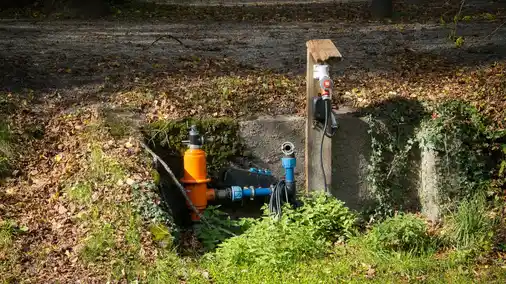
The sensor choice starts with the controller, not the pipe. Picture this: you already have zones wired, a master valve on the manifold, and you want leak detection without ripping out the controller. The right flow sensor is the one your irrigation controller can actually read, not the one with the nicest spec sheet.
Most leak-detection setups fail at the interface. A controller may accept a simple pulse signal, a proprietary accessory port, or a sensor made for one brand family only. If the sensor output and controller input do not match, the sensor may still spin in the line, but the controller will ignore it. That wastes the point of the install.
Look for these fit points before you look at anything else:
- Controller input type: pulse, dry contact, or brand-specific module
- Sensor output: reed switch, turbine pulse, or digital format
- Power needs: some sensors are passive; some need a powered interface
- Supported use: flow monitoring, leak alarms, and shutoff rules
A good shortcut is to check the irrigation controller manual for “flow sensor” and “master valve” together. If the manual only mentions a brand accessory, consult a qualified irrigation professional before treating that as a hard boundary, since brand-specific guidance can be a real compatibility limit. The manual from the manufacturer is the first source to check. The Irrigation Association also notes that controller and sensor compatibility should be verified before installation, which is why this step matters. This is the part many generic articles skip. They talk about “compatible with most systems,” which is how people end up with a sensor that reports nothing useful.
What does a leak sensor need to see?
A leak sensor needs to see a change larger than normal zone noise. That means the sensor has to be sensitive enough to notice a stuck valve or a split lateral, while still ignoring harmless swings from one sprinkler zone to another.
The trick is zone behavior. A 20-minute turf zone might carry a very different flow than a 5-minute drip zone, so a single fixed threshold can be wrong if the controller does not support zone-specific profiles. If your controller can store separate baselines by zone, that is the better setup.
Use this rule of thumb for selection:
-
Choose a sensor that reads low enough for drip zones.
If the sensor only wakes up at high flow, it may miss a slow leak. -
Choose a sensor that stays stable across normal pressure changes.
A sensor that chatters on small pressure swings creates nuisance alarms. -
Choose a sensor that can support a shutdown rule.
Leak detection is much better when the controller can trip the master valve. -
Choose a sensor with enough range for your biggest zone.
A sensor that clips at peak zone flow cannot distinguish a big zone from a broken pipe.
The best leak-detection sensor is not simply the one with the highest maximum flow; it is the one that can see the small and the large end of your system without turning every irrigation cycle into a false alarm.
How do you set the leak detection threshold?
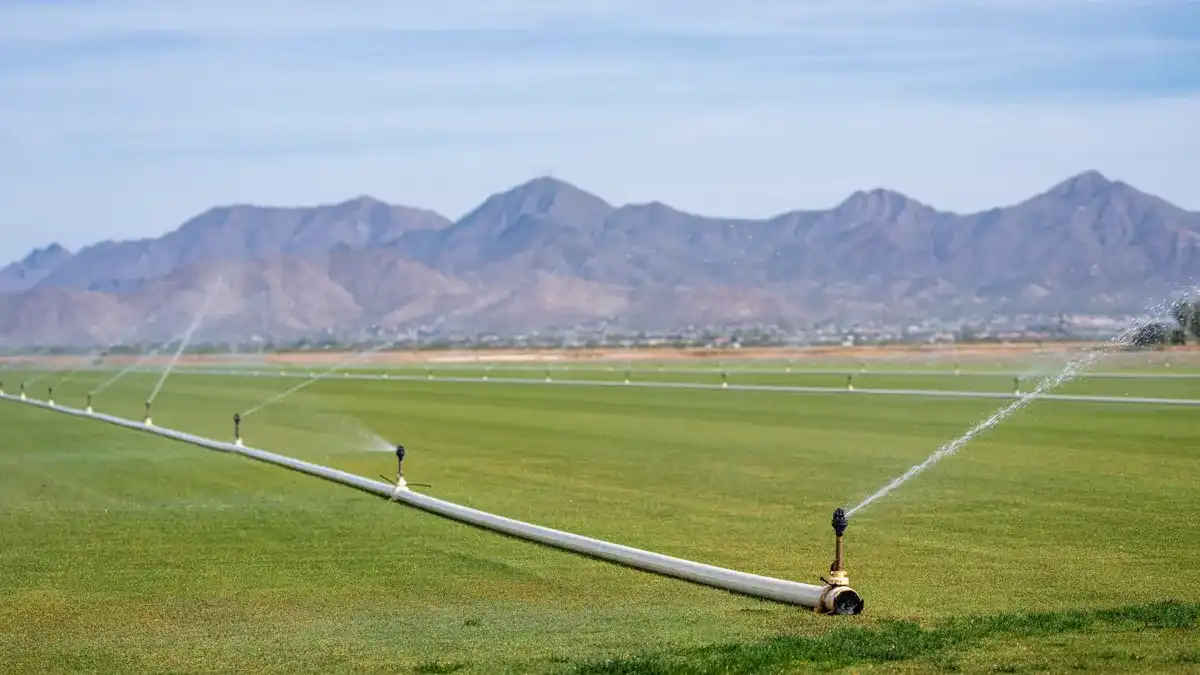
You set the threshold from each zone’s normal flow pattern. Then you allow a narrow cushion above it for weather, pressure, and valve wear. That cushion is what separates a real leak from normal operation.
If your controller supports zone flow monitoring, use that feature. A controller that can compare one zone’s current draw against its saved baseline is far better than one that only watches total mainline flow. Total flow can hide a leak in one zone if another zone is off or running low.
Use this process:
- Record the baseline. Run each zone under normal conditions and note the typical flow reading.
- Compare by zone type. Separate turf, shrub, and drip zones; they rarely share the same pattern.
- Set a warning band. Leave room for small changes from clogged nozzles, seasonal shifts, or pressure regulator drift.
- Set the alarm band. Make it tight enough to catch a real break, but not so tight that every start-up trips it.
- Test with the master valve. Confirm that an alarm can actually stop flow, not just log a message.
A lot of homeowners set the threshold too low because they want instant detection. That creates false trips after a head is replaced or a filter gets dirty. Set it too high and the leak can run long enough to flood a bed or wash out a trench. Both mistakes cost more than the sensor.
Which sensor type fits your pipe and zone layout?
The right sensor type depends on your pipe size and zone layout. For most irrigation leak-detection work, you want a turbine or paddle-style sensor that the controller can read as a pulse stream. Those are common because they are easy for controllers to count.
A water meter can be a better fit when the goal is whole-system accountability, but it is not always the easiest path for zone-level leak detection. A meter is useful if you want utility-style tracking at the service entrance. A flow sensor is better when you want the controller to react zone by zone.
Use the layout to guide the choice:
- Single mainline with a master valve: a pulse flow sensor is often the cleanest fit
- Many mixed zones: pick a sensor and controller pair that supports zone-based learning
- Drip-heavy systems: avoid sensors that need high flow to register cleanly
- Large commercial runs: a meter-style setup can help, especially where total use matters
Here’s the catch: a sensor that is perfect on paper can be wrong for a pipe that is too large or too small for its sensing range. Mainline size matters because accuracy falls off when the device sits near the edge of its intended flow band. The vendor’s chart should show the usable range, not just the maximum rating.
If a page or spec sheet never mentions actual sensing range, that is a warning sign. It may still work, but it was not built with leak detection in mind.
How does the master valve change the choice?
A master valve changes the choice because it gives the controller a place to stop flow. Without that valve, the controller can warn you, but the leak keeps moving through the line until someone shuts it off by hand.
If you want automatic shutoff, the sensor choice should be made with the master valve in mind. The controller has to support both inputs: the sensor that reports abnormal flow and the valve output that closes the line. If one piece is missing, the system is only half a safeguard.
That means you should check three things:
- Valve control support: the controller can close a master valve on alarm
- Alarm logic: the controller can separate startup surge from a real leak
- Reset behavior: after an alarm, you can inspect and restore the zone without a messy loop
A master valve does add a point of failure. If the valve sticks, the sensor can detect the issue but not fix it. If the sensor is noisy, the valve may shut off too often. Still, for leak detection, the valve usually earns its keep. It gives the sensor teeth.
Do not pick a sensor based on leak detection alone if your controller cannot act on the signal. A loud alert is useful. A closed valve is better.
What are the most common mistakes?
The most common mistake is buying a sensor that matches the pipe but not the controller. That costs time, extra wiring, and often a second purchase. The fix is simple: confirm the controller’s sensor input before you compare any sensor specs.
The next mistake is choosing by maximum flow only. That costs you slow-leak detection in drip zones and nuisance alarms in small beds. The better move is to check the sensor’s useful range at both ends, not just the top end.
Watch for these errors:
- Ignoring zone variety: one threshold for all zones can miss a leak or trigger false alarms
- Skipping the master valve plan: if the controller cannot shut off flow, the sensor is only a reporter
- Using a water meter as a catch-all: a meter helps track use, but it may not give the zone-level behavior you want
- Buying on brand name alone: brand match is useful, but the output format still has to fit the controller
The truth is, many “bad sensor” complaints are really setup mistakes. The sensor was fine; the threshold was wrong, the zone baseline was missing, or the controller could not use the signal the way the installer expected.
How do I compare options without overbuying? How to Choose a Flow Sensor for Irrigation Leak Detection
You compare options by asking which problem you need solved first. That means controller compatibility, zone-level leak detection, or whole-line shutoff. That order keeps you from paying for features that your setup cannot use.
If your controller already supports flow monitoring and a master valve, you can choose a simpler sensor that matches the input cleanly. If your site has mixed turf and drip, spend more on a sensor/controller pair that can handle separate baselines. If your goal is long-term water accountability, a water meter may belong at the service entry, not at every zone.
| Option | Typical use | Fit notes | Price / spec clue |
|---|---|---|---|
| Pulse flow sensor | Controller-based leak detection | Works well when the controller accepts the sensor signal | Usable range matters more than max flow |
| Water meter | Whole-system accountability | Better at service entry than per-zone logic | Often chosen for total-use tracking |
| Sensor + master valve setup | Automatic shutoff | Best when the controller can close the line | Needs compatible valve output |
Use this filter:
- Start with compatibility. If the sensor does not talk to the controller, stop.
- Check the sensing range. Make sure it fits both low-flow and high-flow zones.
- Confirm alarm actions. Look for master valve shutoff, not just alerts.
- Review zone support. Separate baselines matter more than fancy app charts.
- Decide how much monitoring you need. Basic leak detection and full usage tracking are not the same job.
If you are building from scratch, the cleanest path is usually controller-first, sensor-second, valve-third. If you are retrofitting an older system, the sensor choice may be forced by the controller already on the wall. That is fine. A narrower, compatible choice beats a bigger mismatch every time.
For broader system planning, the irrigation system monitoring and sensors hub can help you place this decision in the larger setup without mixing it up with install steps or controller troubleshooting.
FAQ
Do flow sensors detect broken pipes?
Yes, a flow sensor can detect the flow pattern caused by a broken pipe. The key is whether the break creates enough extra flow to move past your leak threshold. A slow seep may look like normal variation, while a full split line usually creates a clear spike that the controller can flag.
Can a flow sensor shut off water automatically?
Yes, if the controller supports a master valve or shutoff relay. The sensor itself only reports flow; the controller uses that signal to close the valve. Without that control path, the sensor can warn you but cannot stop the line on its own.
Do flow sensors work on every irrigation zone?
No, not every flow sensor fits every zone well. Drip zones, turf zones, and high-flow rotor zones can behave very differently, and some sensors struggle at the low end. A sensor that works well for one zone type may need separate thresholds or a different controller setup for another.
Drafted with AI; not yet reviewed by a person.