Last updated: November 11, 2026
Quick Answer: Your main water line can support irrigation only if the pipe size, meter size, pressure, and everyday household demand leave enough room for the extra flow. For How to Check Whether Your Main Water Line Can Support Irrigation, the quickest check is to identify the service line and water meter, note the pressure regulator if there is one, then compare those limits with the rest of the house’s fixture load and the utility connection.
What the main water line has to prove first
The main water line has to supply the house and the yard at the same time without dragging the system below usable pressure. That means the question is not just “How much water is available?” It is “How much can move through the service line, meter, and shutoff path at once?”
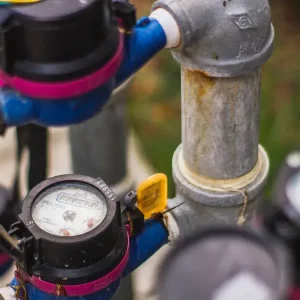
Start with the physical pieces at the house. Look for the meter size stamped on the water meter body, often in 5/8-inch, 3/4-inch, or 1-inch sizes. Find the main shutoff valve, usually near the meter or where the line enters the home. If there is a pressure regulator, it may be on the house side of the meter or near the foundation. These parts do not tell the whole story by themselves, but they tell you where the bottleneck is likely to be.
Utility records matter because the city or water provider often knows the service line size and material. A 3/4-inch service line can be fine for a modest house, but it may leave less margin once irrigation is added. A 1-inch service line usually gives more headroom, though the meter and pressure regulator can still narrow the path. The service line is only one part of the system; a larger pipe does not help if the meter is undersized.
This page is about capacity planning at the supply line level, not sprinkler head layout or pump selection. For the broader planning picture, the hub on [Irrigation water source and capacity planning — The Complete Guide] can sit next to this one. For local supply planning, see [How to Measure Water Pressure for Irrigation] and [How to Size Irrigation Zones]. EPA WaterSense also covers efficient outdoor water use.
How do I check the line without guessing?
You check it by identifying the service line size, reading the meter, confirming the pressure regulator setting, and comparing that with your home’s existing load. A simple inspection can beat assumptions, because many homes have been altered over time and the visible plumbing is not always the limiting factor.
-
Read the water meter size first. Look for the stamped nominal size on the meter register or body, such as 5/8-inch, 3/4-inch, or 1-inch. This tells you the meter’s basic pass-through limit, and a 5/8-inch meter is usually a tighter constraint than a 1-inch meter.
-
Find the service line information in utility records. Ask the water utility for the service line size, material, and any records tied to the house connection. A 3/4-inch copper or polyethylene service line behaves differently from a 1-inch line, and the records often show that difference clearly.
-
Locate the pressure regulator. If a pressure regulator is installed, note the set pressure on the house side. Many residential regulators are adjusted in the 40 to 70 psi range, but the actual setting matters more than the general range. A regulator can protect fixtures while also reducing the pressure available for long runs. If you are unsure, consult a licensed plumber or the utility; EPA WaterSense notes that home water pressure should be managed carefully.
-
List the home’s fixture load. Count the fixtures that can run at the same time: showers, toilets filling, dishwasher, washing machine, hose bibs, and kitchen taps. A house with two bathrooms and frequent simultaneous use has less spare capacity than a weekend cabin with one bath.
-
Check the utility connection path for restrictions. A partly closed main shutoff valve, old galvanized piping, a small meter, or a corroded service line can cut flow before irrigation even enters the picture. A 1-inch line with a 5/8-inch meter still behaves more like a 5/8-inch bottleneck.
-
Compare the line’s likely ceiling with your yard plan. If the household already has periods of heavy use and the service line is modest, irrigation may be supportable only on a separate schedule, not alongside peak indoor demand. That is a practical answer, not a failure.
This procedure uses things you can verify in an hour, not wishful thinking. It is also honest about its limits: if the utility will not release service-line details and the meter area is inaccessible, the answer stays uncertain until a plumber or utility technician confirms it.
Which numbers matter most: meter size, pressure, and daily household load?
The meter size matters most because it often becomes the narrowest passage even when the service line is larger. A 3/4-inch meter on a 1-inch service line can still cap the amount of water that reaches the house, so the biggest pipe on the property is not the whole story.
Pressure matters because it tells you how much push is available after the water passes through the meter, regulator, and piping. A home regulated to 50 psi may have enough pressure for normal indoor use, but once long pipe runs and multiple fixtures are active, the margin shrinks. Higher pressure is not a free pass either; excessive pressure can stress fittings and fixtures, which is why many homes have a pressure regulator in the first place. The U.S. Environmental Protection Agency’s WaterSense program recommends checking and managing home pressure rather than assuming more is always better.
Fixture load is the piece many people forget. A dishwasher, a shower, and a washing machine starting together can use a surprising amount of the household supply. Add irrigation to that same moment and the system can show its weakness as sputtering fixtures, slower tank refills, or a sudden drop at an outside hose bib. The line is not failing; it is simply being asked to do too much at once.
The smart comparison is not “Can the line ever run irrigation?” It is “Can the line support irrigation at the same time the home is doing ordinary work?” That distinction decides whether you can irrigate in the early morning without issue or whether the schedule has to stay carefully separated from indoor peak use.
A common mistake is judging by pipe diameter alone. That costs people time and sometimes money, because they design around the visible plumbing instead of the actual choke point. The better move is to treat meter size, regulator setting, and utility connection as a single chain. If the numbers are unclear, consult a licensed plumber or the utility before changing the system.
What utility records can tell you that the pipe cannot
Utility records can tell you whether the house connection was ever meant to carry more than basic residential demand. That matters because the service line may look generous from the street while the documented connection is older, smaller, or shared with other constraints you cannot see.
Ask the utility for three specific things: the service line size, the meter size on record, and any notes about the connection point. Some utilities also keep material records, so they can tell you whether the service line is copper, polyethylene, or another material. Those details help because a 3/4-inch line in one material and a 3/4-inch line in another are not always equivalent in the field, especially if one has age-related restriction. If the record is unclear, ask the utility or a licensed plumber to verify it.
If the record shows a small meter, that is often the first red flag. A 5/8-inch meter is common in homes, but it gives less room for added outdoor demand than a 1-inch meter. If the service record also shows a short run from the main to the house, the issue may be less severe than if the line is long and has several bends or older fittings.
This is also the place to check for a utility connection that was built for a smaller house or an earlier era. Older homes sometimes have service lines that were adequate when plumbing expectations were modest. Once two showers, laundry, and outdoor watering share the same line, the old setup can feel undersized even if it still “works.”
If records are unclear, do not assume the best. A vague record that says “unknown” or “existing service” is not proof of capacity. It just means the final answer depends on a field inspection or a licensed plumber’s confirmation.
Signs the main water line is too small for irrigation
The main water line is probably undersized for irrigation if normal house use already causes pressure drops, slow fixture recovery, or uneven flow at hose bibs. Those are the clues that the system is near its limit before any yard demand is added.
Watch for three practical warning signs. First, water at the shower weakens when a toilet fills or the washing machine runs. Second, outdoor faucets deliver noticeably less flow than expected even when fully open. Third, the pressure regulator or main shutoff area shows evidence of age, corrosion, or past repairs that could restrict flow. None of these alone proves the line is too small, but together they point in the same direction.
An older 3/4-inch service line is the most common borderline case. It may handle a house with light indoor use and modest irrigation, then struggle once the yard load grows or the home has more simultaneous demand. A 1-inch service line with a 1-inch meter often has more breathing room, but it still depends on household load and utility-side constraints.
The cost of ignoring these signs is not just inconvenience. The irrigation schedule can become unreliable, indoor fixtures can lose performance, and the system may be pushed into a pattern of constant compromise. The better response is to reduce simultaneous demand, confirm the records, and treat the line as a capacity problem rather than a pressure mystery. If the picture still looks borderline, consult a plumber or utility technician before adding zones.
This is the point where a generic article often goes wrong. It talks about sprinklers first. That skips the real question: whether the house supply can carry both home use and yard demand without becoming the weak link.
When the answer is yes, and when it is not
The answer is yes when the service line, meter, and pressure regulator leave enough margin after normal household demand is accounted for. A home with a 1-inch service line, a 1-inch meter, a reasonable regulator setting, and moderate fixture load is far more likely to support irrigation than a house with a 5/8-inch meter and older 3/4-inch service line.
The answer is not yes when the line already shows stress during ordinary use. If the pressure sags during showers, if the meter is small, or if utility records show a marginal connection, irrigation may still be possible only with tight scheduling and conservative expectations. That is not the same as “the house needs a booster pump,” and this page does not try to solve that separate question.
The honest trade-off is simple: a smaller line can sometimes support irrigation, but only by giving up flexibility. You may have to avoid watering while laundry, dishwashing, or multiple showers are running. If that trade-off sounds unworkable, the line is functionally too small for the way the house is actually used.
For many readers, the useful result is not a perfect yes or no. It is a capacity judgment: enough margin, borderline, or not enough. That judgment is what should drive the next step, not guesswork or a catalog of sprinkler parts.
What to do next if the line looks borderline
If the line looks borderline, the safest next move is to confirm the utility record, inspect the meter and pressure regulator, and then decide whether the home can keep irrigation on a separate schedule. A borderline line does not automatically need replacement, but it does need a clear plan.
Start with the easy controls. Make sure the main shutoff valve is fully open. Confirm that the pressure regulator is working and not set lower than necessary for the house. Ask the utility whether the service line size can be verified from their side. Those steps cost little and often explain a lot.
If the records, meter, and regulator still suggest a tight supply, the question becomes one of priorities. A house with an undersized service line may still support light irrigation if indoor demand is low and watering happens at off-peak times. A house with frequent simultaneous use may not. That is a supply-line limitation, not a failure of the yard plan.
Do not use this page to decide on pump equipment or sprinkler design. Those are separate questions with separate answers, and mixing them usually creates confusion. The main water line either has room or it does not, and the records plus visible hardware usually tell that story well enough.
Key Takeaways
- The main water line can support irrigation only if the service line, meter, and household demand leave enough margin at the same time.
- A 5/8-inch or 3/4-inch meter is often a tighter bottleneck than a 1-inch meter, even when the pipe looks larger.
- Utility records are not optional; they often reveal the real service line size and material.
- A pressure regulator can protect the house but also reduce available margin for outdoor use.
- If the house already loses pressure during ordinary fixtures, irrigation may be borderline or impractical.
Can a home water line support a sprinkler system?
Yes, if the service line, meter, and household load leave enough room for the added demand. A 1-inch line and meter usually give more flexibility than a 5/8-inch setup, but the real answer depends on the utility connection and how often indoor fixtures run at the same time.
How do I know if my water service is big enough?
You know by checking the meter size, asking the utility for service line records, and locating any pressure regulator or shutoff restrictions. A visible 1-inch pipe does not guarantee adequate supply if the meter is smaller or the line is old and restricted. The whole path matters, not one section.
What signs show my water line is undersized for irrigation?
Weak showers when another fixture runs, slow hose-bib flow, and pressure drops during normal household use are the clearest signs. Older 3/4-inch service lines and small meters are common trouble spots. If those signs show up before irrigation is added, the line is already close to its limit.
Drafted with AI; not yet reviewed by a person.